

Maggiori informazioni sul libro
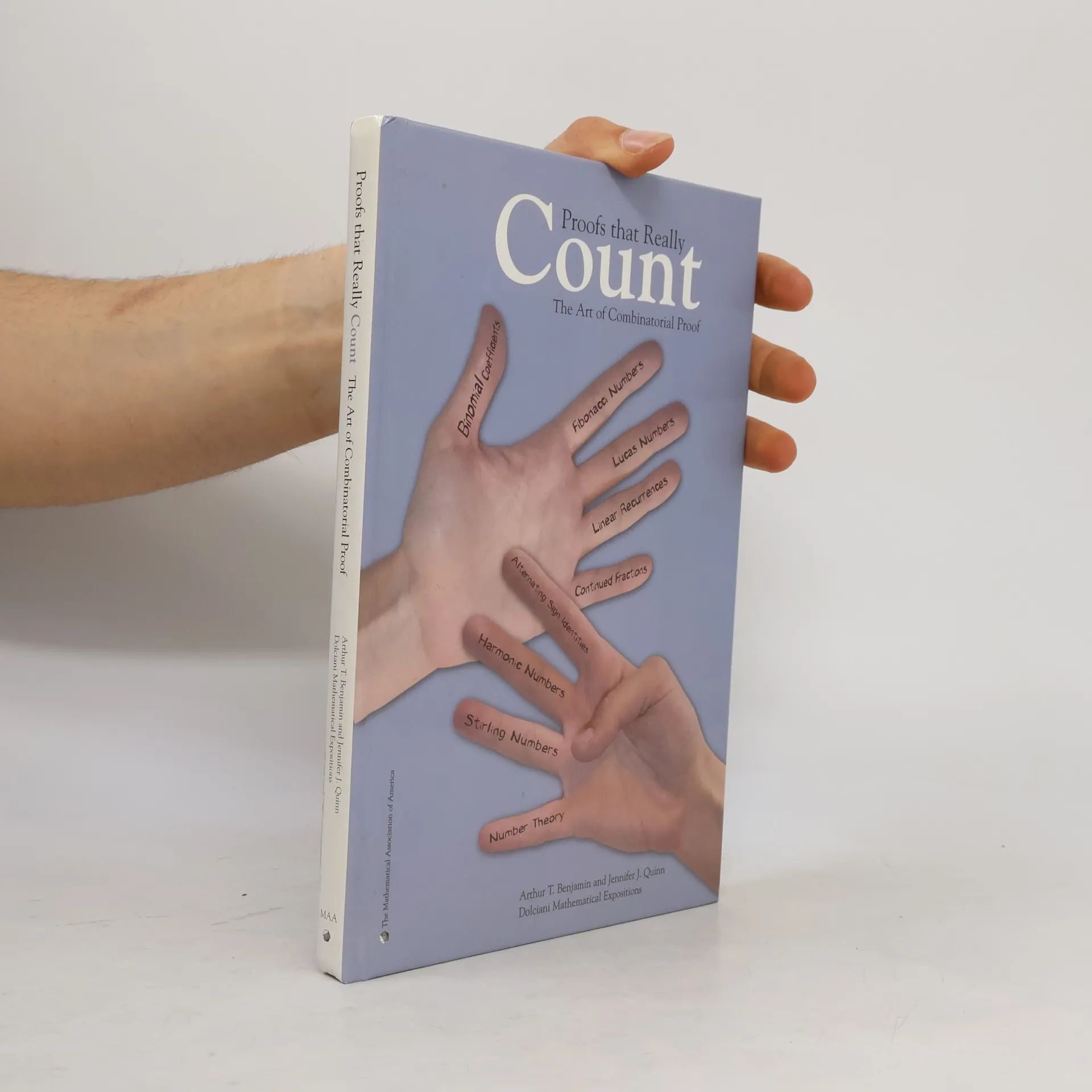
Mathematics is the science of patterns, and mathematicians attempt to understand these patterns and discover new ones using a variety of tools. In Proofs That Really Count, award-winning math professors Arthur Benjamin and Jennifer Quinn demonstrate that many number patterns, even very complex ones, can be understood by simple counting arguments. The book emphasizes numbers that are often not thought of as numbers that Fibonacci Numbers, Lucas Numbers, Continued Fractions, and Harmonic Numbers, to name a few. Numerous hints and references are given for all chapter exercises and many chapters end with a list of identities in need of combinatorial proof. The extensive appendix of identities will be a valuable resource. This book should appeal to readers of all levels, from high school math students to professional mathematicians.
Acquisto del libro
Dolciani Mathematical Expositions: Proofs That Really Count, Arthur Benjamin, Jennifer J. Quinn
- Lingua

- Pubblicato
- 2003
- Rilegatura
- (Copertina rigida)
Metodi di pagamento
Ancora nessuna valutazione.
- Titolo
- Dolciani Mathematical Expositions: Proofs That Really Count
- Sottotitolo
- The Art of Combinatorial Proof
- Lingua
- Inglese
- Autori
- Arthur Benjamin, Jennifer J. Quinn
- Pubblicato
- 2003
- Formato
- Copertina rigida
- Pagine
- 206
- ISBN10
- 0883853337
- ISBN13
- 9780883853337
- Serie
- Descrizione
- Mathematics is the science of patterns, and mathematicians attempt to understand these patterns and discover new ones using a variety of tools. In Proofs That Really Count, award-winning math professors Arthur Benjamin and Jennifer Quinn demonstrate that many number patterns, even very complex ones, can be understood by simple counting arguments. The book emphasizes numbers that are often not thought of as numbers that Fibonacci Numbers, Lucas Numbers, Continued Fractions, and Harmonic Numbers, to name a few. Numerous hints and references are given for all chapter exercises and many chapters end with a list of identities in need of combinatorial proof. The extensive appendix of identities will be a valuable resource. This book should appeal to readers of all levels, from high school math students to professional mathematicians.