

Maggiori informazioni sul libro
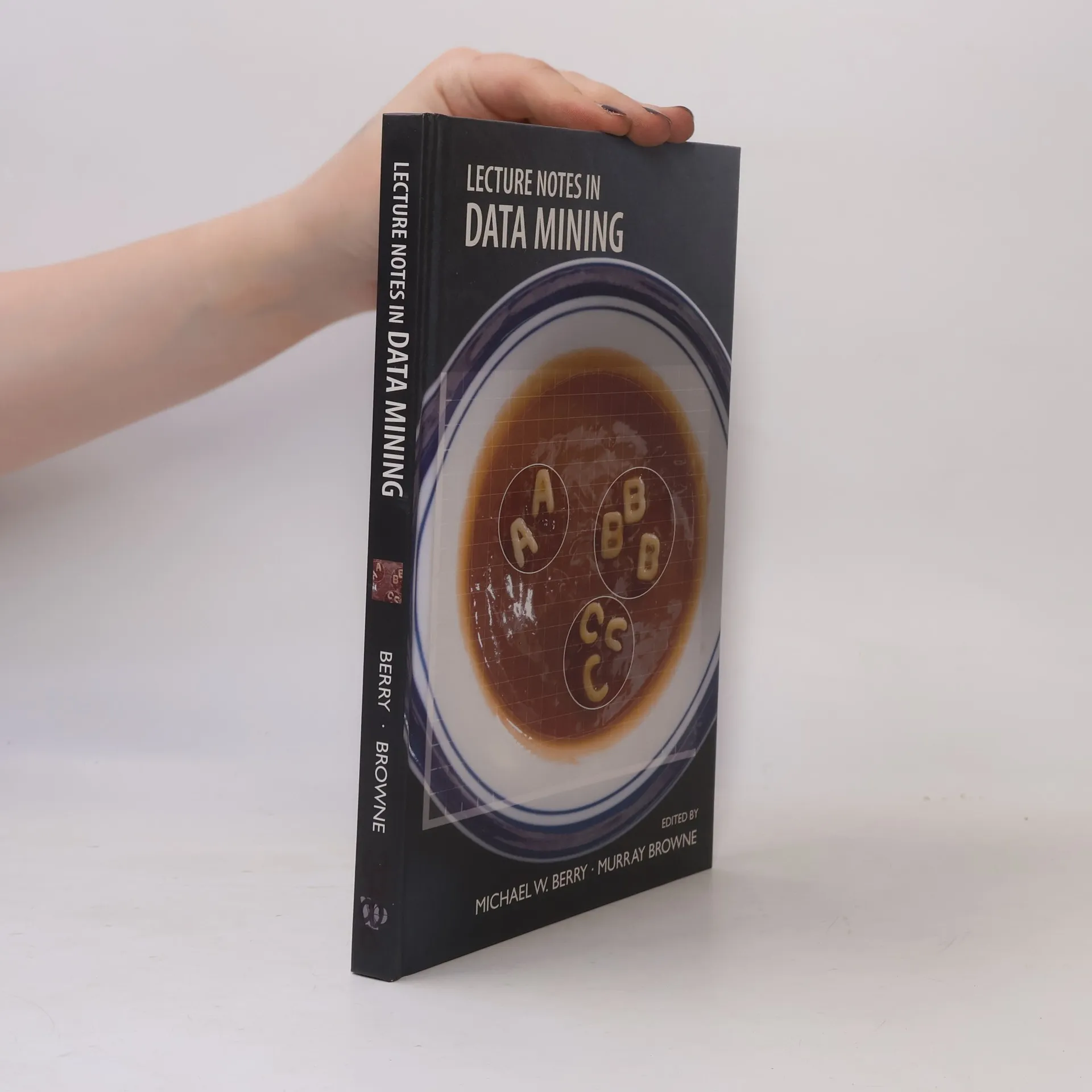
The continual explosion of information technology and the need for better data collection and management methods has made data mining an even more relevant topic of study. Books on data mining tend to be either broad and introductory or focus on some very specific technical aspect of the field. This book is a series of seventeen edited "student-authored lectures" which explore in depth the core of data mining (classification, clustering and association rules) by offering overviews that include both analysis and insight. The initial chapters lay a framework of data mining techniques by explaining some of the basics such as applications of Bayes Theorem, similarity measures, and decision trees. Before focusing on the pillars of classification, clustering and association rules, the book also considers alternative candidates such as point estimation and genetic algorithms.
Acquisto del libro
Lecture Notes in Data Mining, Michael W. Berry, Kate Murray-Browne
- Lingua

- Pubblicato
- 2006
- Rilegatura
- (Copertina rigida)
Metodi di pagamento
Ancora nessuna valutazione.
- Titolo
- Lecture Notes in Data Mining
- Lingua
- Inglese
- Editore
- World Scientific Pub.
- Pubblicato
- 2006
- Formato
- Copertina rigida
- Pagine
- 222
- ISBN10
- 9812568026
- ISBN13
- 9789812568021
- Serie
- Descrizione
- The continual explosion of information technology and the need for better data collection and management methods has made data mining an even more relevant topic of study. Books on data mining tend to be either broad and introductory or focus on some very specific technical aspect of the field. This book is a series of seventeen edited "student-authored lectures" which explore in depth the core of data mining (classification, clustering and association rules) by offering overviews that include both analysis and insight. The initial chapters lay a framework of data mining techniques by explaining some of the basics such as applications of Bayes Theorem, similarity measures, and decision trees. Before focusing on the pillars of classification, clustering and association rules, the book also considers alternative candidates such as point estimation and genetic algorithms.