





Parametri
- 400pagine
- 14 ore di lettura
Maggiori informazioni sul libro
Java's "Project Jigsaw" has arrived with Java 11, introducing a modularity framework that enhances reliability and maintainability while reducing tight coupling of system components. This guide delves into the Java Module System, showcasing how packaging code into well-defined units simplifies the delivery of safe applications. The module system allows for precise control over JAR interactions and helps identify missing dependencies at startup. Since Java 9, all core Java APIs are distributed as modules, benefiting libraries, frameworks, and applications. This comprehensive resource covers the creation and usage of Java modules through detailed examples and diagrams. Readers will explore the anatomy of a modular Java application, best practices for module design, debugging techniques, and deployment strategies. Key topics include building modules from source to JAR, migrating to modular Java, decoupling dependencies, handling reflection and versioning, and customizing runtime images. Ideal for developers with some Java experience, the book equips readers with the knowledge to adapt real-world projects to modular Java, addressing compatibility challenges and offering migration strategies. Authored by Nicolai Parlog, a developer and trainer, this guide is essential for mastering the Java Module System and optimizing application design.
Acquisto del libro
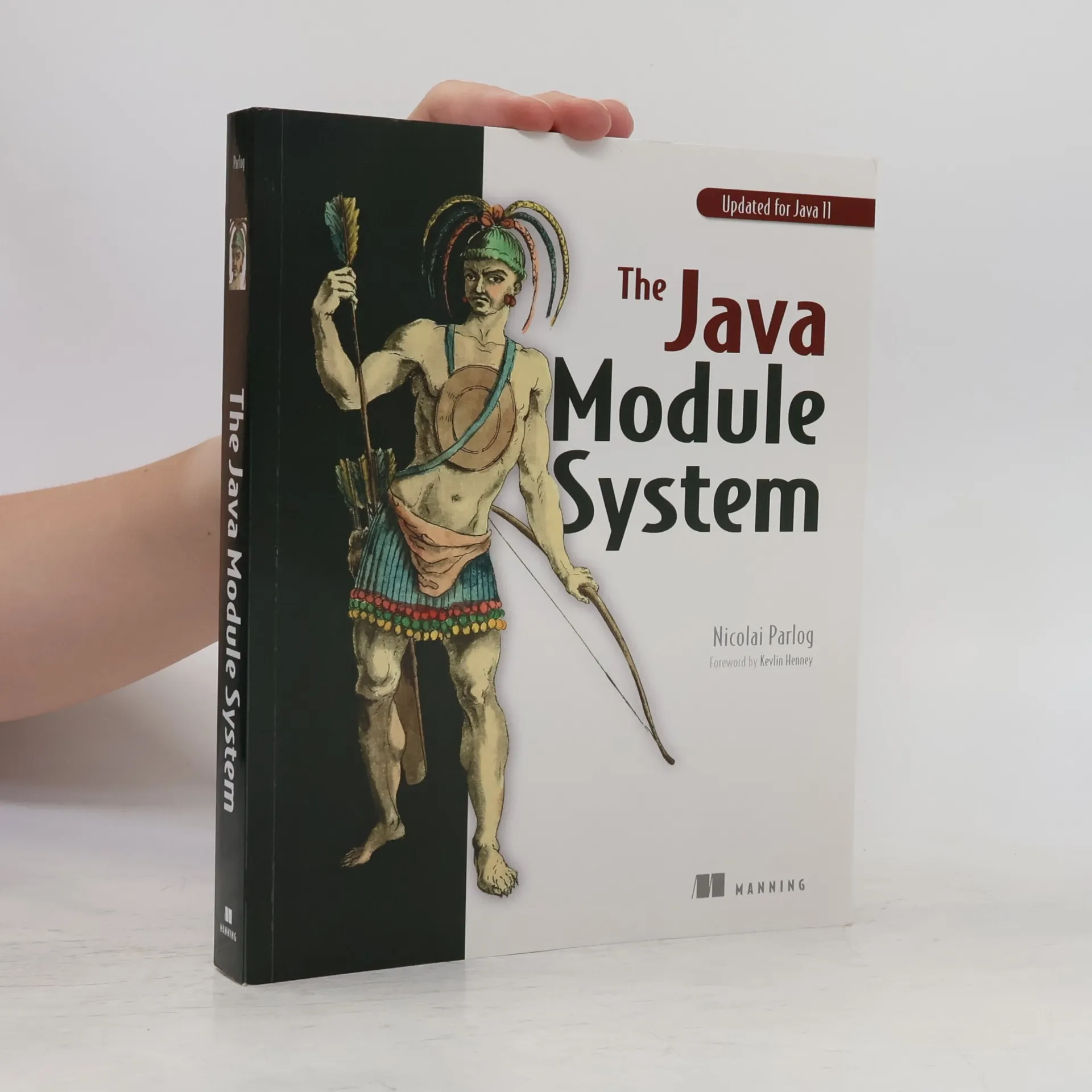
The Java Module System, Nicolai Parlog, Kevlin Henney
- Lingua

- Pubblicato
- 2018
- product-detail.submit-box.info.binding
- (In brossura),
- Condizioni del libro
- Danneggiato
- Prezzo
- 7,78 €
Metodi di pagamento
Ancora nessuna valutazione.
- Titolo
- The Java Module System
- Sottotitolo
- Updated for Java II
- Lingua
- Inglese
- Autori
- Nicolai Parlog, Kevlin Henney
- Editore
- Manning Publications
- Pubblicato
- 2018
- Formato
- In brossura
- Pagine
- 400
- ISBN10
- 1617294284
- ISBN13
- 9781617294280
- Serie
- Descrizione
- Java's "Project Jigsaw" has arrived with Java 11, introducing a modularity framework that enhances reliability and maintainability while reducing tight coupling of system components. This guide delves into the Java Module System, showcasing how packaging code into well-defined units simplifies the delivery of safe applications. The module system allows for precise control over JAR interactions and helps identify missing dependencies at startup. Since Java 9, all core Java APIs are distributed as modules, benefiting libraries, frameworks, and applications. This comprehensive resource covers the creation and usage of Java modules through detailed examples and diagrams. Readers will explore the anatomy of a modular Java application, best practices for module design, debugging techniques, and deployment strategies. Key topics include building modules from source to JAR, migrating to modular Java, decoupling dependencies, handling reflection and versioning, and customizing runtime images. Ideal for developers with some Java experience, the book equips readers with the knowledge to adapt real-world projects to modular Java, addressing compatibility challenges and offering migration strategies. Authored by Nicolai Parlog, a developer and trainer, this guide is essential for mastering the Java Module System and optimizing application design.