




Maggiori informazioni sul libro
Why is the Mona Lisa the most famous painting? Why did Facebook succeed while others failed? Did the surge in Iraq lead to less violence? How much do CEOs impact their companies? Does higher pay truly incentivize hard work? Sociologist Duncan Watts challenges the assumption that these answers are rooted in common sense. In this thought-provoking exploration, he reveals that the explanations we offer for observed outcomes—often appearing obvious post-factum—are frequently misleading. Drawing on cutting-edge research and a range of historical and contemporary examples, Watts illustrates how common sense and historical narratives can obscure our understanding of human behavior. This misperception leads to frequent failures in predicting and managing social and economic systems. For instance, while it seems clear that people respond to incentives, policymakers often misjudge these responses. Similarly, marketers struggle to identify influential figures in social trends, and predicting the next successful product remains a challenge, even for experts. Watts argues that recognizing the limitations of common sense is crucial for improving future planning and understanding current dynamics, with significant implications across politics, business, marketing, science, and daily life.
Acquisto del libro
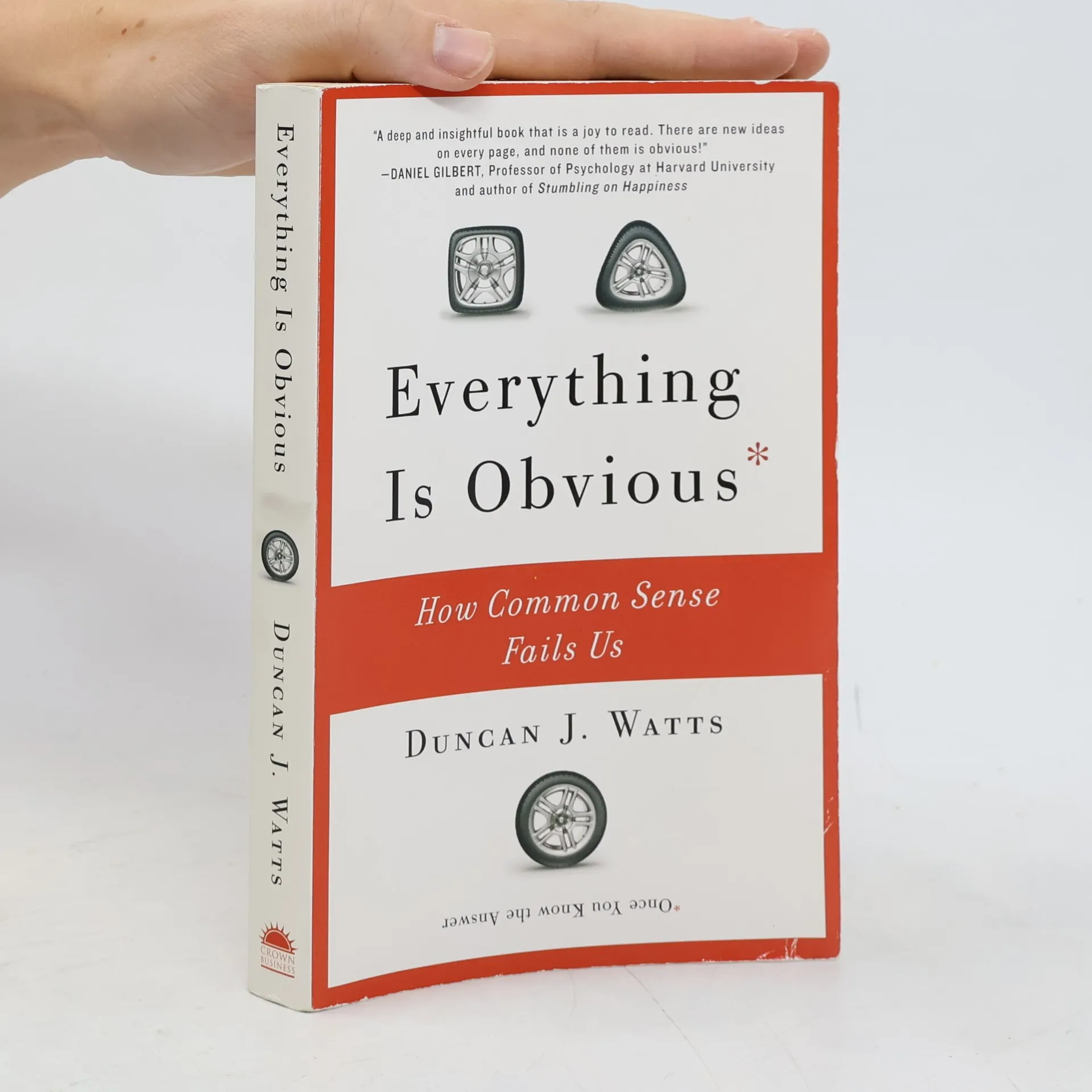
Everything Is Obvious, Watts J. Duncan
- Lingua

- Pubblicato
- 2012
- Rilegatura
- (In brossura),
- Condizioni del libro
- Danneggiato
- Prezzo
- 11,93 €
Metodi di pagamento
Ancora nessuna valutazione.
- Titolo
- Everything Is Obvious
- Sottotitolo
- How Common Sense Fails Us
- Lingua
- Inglese
- Autori
- Watts J. Duncan
- Editore
- Crown Currency
- Pubblicato
- 2012
- Formato
- In brossura
- Pagine
- 368
- ISBN10
- 0307951790
- ISBN13
- 9780307951793
- Serie
- Tag
- Saggistica, Scienze sociali, Commercio, Auto-aiuto, Temi psicologici, Psicologia, Scienza, Economia, Sociologia, Società, Imprenditoria, Marketing e PR, Cultura, Creatività, Denaro, Ricerca, Scherzi & Anecdoti, Logica, Strategia, Innovazione, Decisione, Pianificazione, Risoluzione dei problemi, Analisi dei dati, Pensiero Critico, Natura Umana, Prognostica, Economia comportamentale
- Descrizione
- Why is the Mona Lisa the most famous painting? Why did Facebook succeed while others failed? Did the surge in Iraq lead to less violence? How much do CEOs impact their companies? Does higher pay truly incentivize hard work? Sociologist Duncan Watts challenges the assumption that these answers are rooted in common sense. In this thought-provoking exploration, he reveals that the explanations we offer for observed outcomes—often appearing obvious post-factum—are frequently misleading. Drawing on cutting-edge research and a range of historical and contemporary examples, Watts illustrates how common sense and historical narratives can obscure our understanding of human behavior. This misperception leads to frequent failures in predicting and managing social and economic systems. For instance, while it seems clear that people respond to incentives, policymakers often misjudge these responses. Similarly, marketers struggle to identify influential figures in social trends, and predicting the next successful product remains a challenge, even for experts. Watts argues that recognizing the limitations of common sense is crucial for improving future planning and understanding current dynamics, with significant implications across politics, business, marketing, science, and daily life.