

Bookbot

Neuroscienze Cognitive

Questa serie approfondisce gli intricati meccanismi della mente umana, esplorando la complessa relazione tra cervello e comportamento. Attraverso ricerche all'avanguardia e intuizioni teoriche, illumina le basi della cognizione, dell'emozione e della coscienza. Ogni volume offre un'immersione profonda nei meccanismi neurobiologici che plasmano la nostra realtà. È una lettura essenziale per chiunque cerchi una comprensione scientifica della mente.

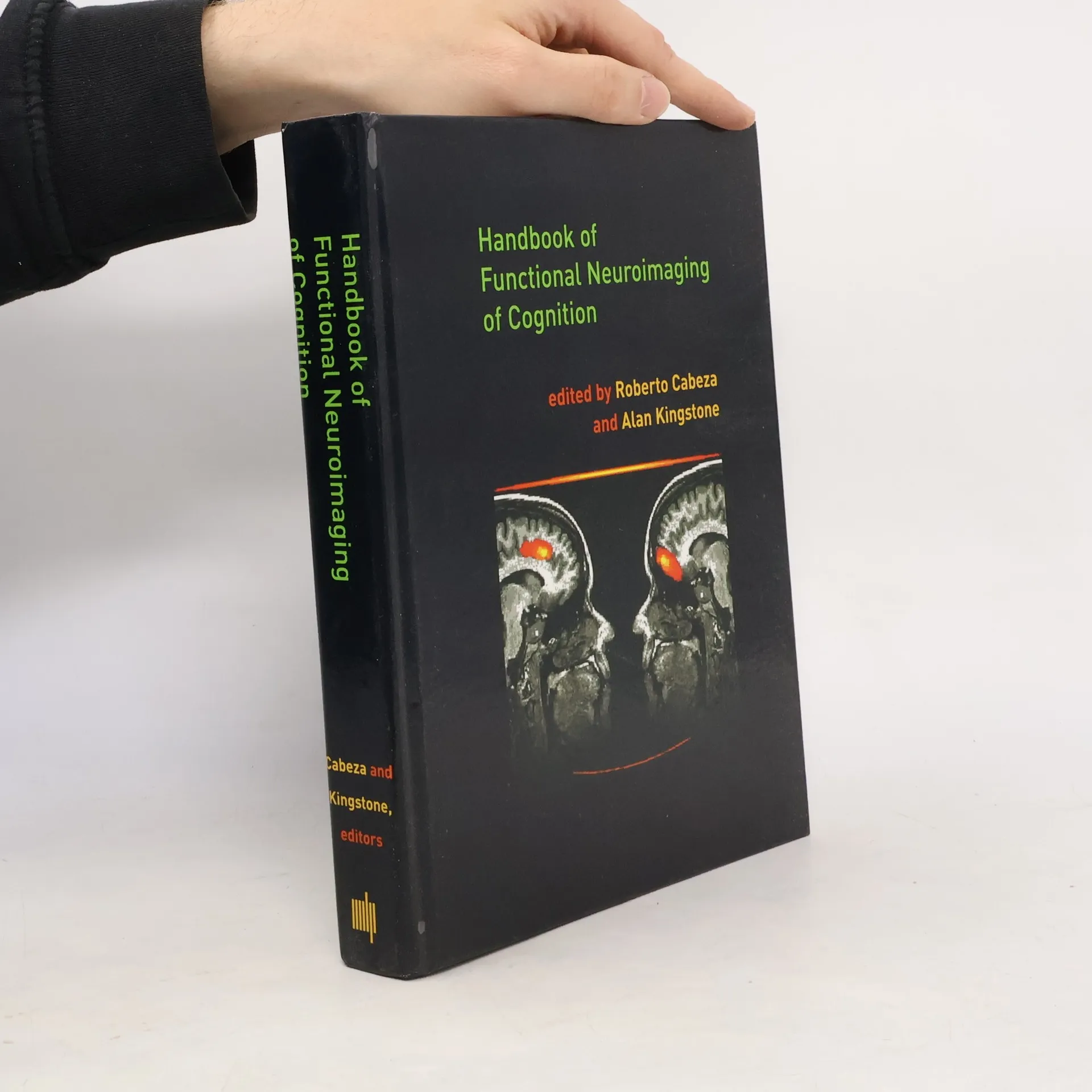
Handbook of Functional Neuroimaging of Cognition
The Merging of the Senses
  • Bringing together neural, perceptual, and behavioral studies, The Merging of the Senses provides the first detailed review of how the brain assembles information from different sensory systems in order to produce a coherent view of the external world. Stein and Meredith marshall evidence from a broad array of species to show that interactions among senses are the most ancient scheme of sensory organization, an integrative system reflecting a general plan that supersedes structure and species. Most importantly, they explore what is known about the neural processes by which interactions among the senses take place at the level of the single cell.The authors draw on their own experiments to illustrate how sensory inputs converge (from visual, auditory, and somatosensory modalities, for instance) on individual neurons in different areas of the brain, how these neurons integrate their inputs, the principles by which this integration occurs, and what this may mean for perception and behavior. Neurons in the superior colliculus and cortex are emphasized as models of multiple sensory integrators.Barry E. Stein is Professor of Physiology and M. Alex Meredith is Associate Professor of Anatomy, both at the Medical College of Virginia, Virginia Commonwealth University.

    The Merging of the Senses
  • With its strong theoretical focus, this book serves as an essential resource on the functional neuroimaging of cognitive processes and on the latest discoveries obtained through positron emission tomography (PET) and functional magnetic resonance imaging (fMRI) techniques. It is organized into three sections. The first covers the history and methods of PET and fMRI, as well as cognitive networks, showing how the brain regions involved in the different cognitive processes interact. The second part, the book's core, covers PET and fMRI findings in specific domains: attention, visual recognition, language, semantic memory, episodic memory, and working memory. The third part covers the effects of aging on brain activity during cognitive performance and also examines research with neuropsychologically impaired patients. Contributors Jeffrey Binder, Randy L. Buckner, Roberto Cabeza, Mark D'Esposito, Paul Downing, Russell Epstein, Karl J. Friston, John D.E. Gabrieli, Todd C. Handy, Joseph B. Hopfinger, Nancy Kanwisher, Zoe Kourtzi, Jessica M. Logan, George R. Mangun, Alex Martin, A.R. McIntosh, L. Nyberg, Cathy J. Price, Marcus E. Raichle

    Handbook of Functional Neuroimaging of Cognition
    3,7