Bookbot

Simon Winchester

    28 settembre 1944

    Simon Winchester è uno scrittore e giornalista britannico la cui vasta carriera ha incluso la copertura di eventi storici cruciali e l'approfondimento di temi profondi, dalla linguistica alla geologia. Il suo approccio è caratterizzato da una ricerca meticolosa e da una narrazione avvincente, che spesso porta alla luce storie affascinanti dai regni della scienza e della storia. Winchester eccelle nel tessere elementi apparentemente disparati in opere coerenti e leggibili, rendendo accessibili ai lettori concetti complessi e figure trascurate. I suoi contributi sono apprezzati per la loro erudizione, ma soprattutto per la loro capacità di dare vita al passato e ispirare la contemplazione del mondo.

    Simon Winchester
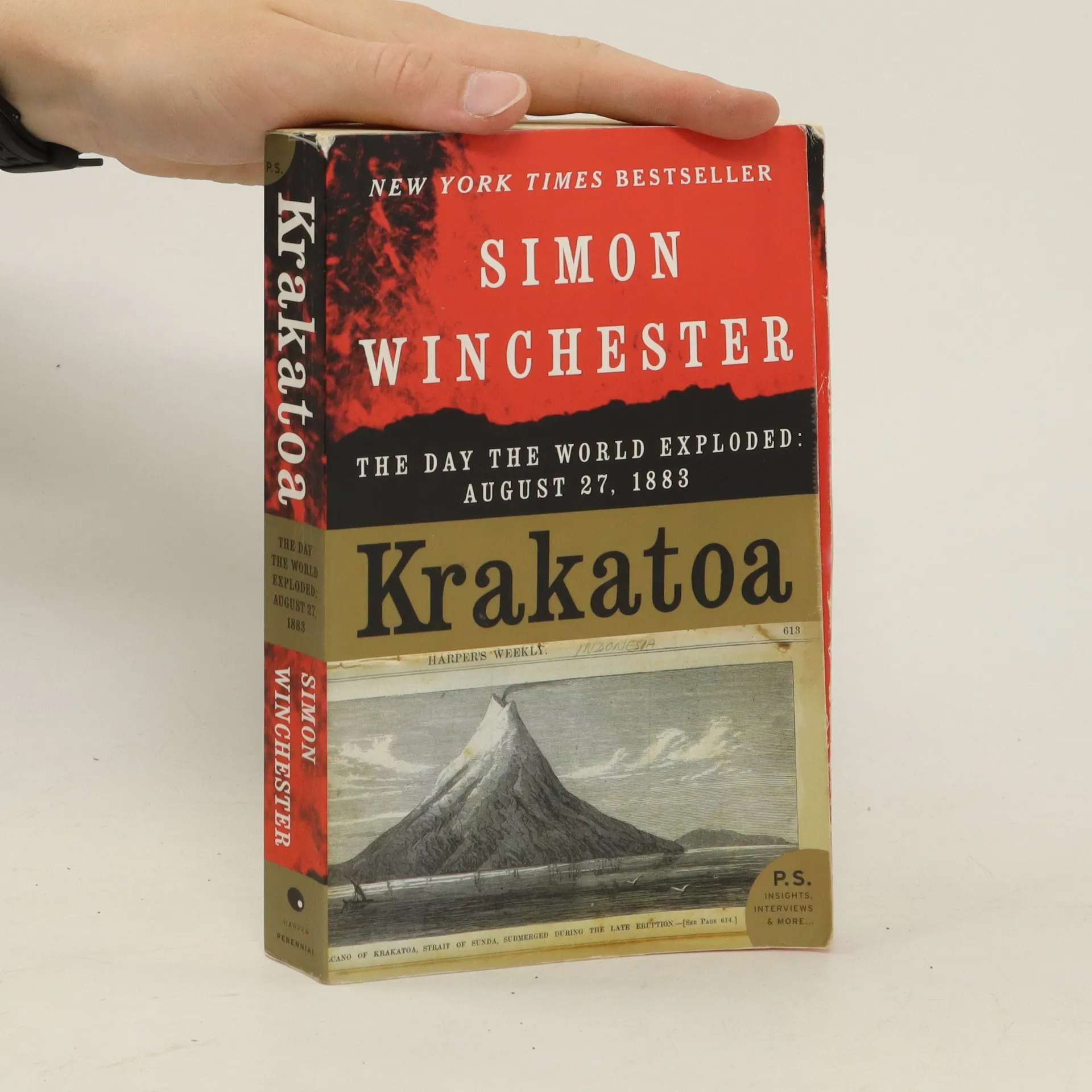
    Krakatoa
    The Perfectionists
    The men who united the States
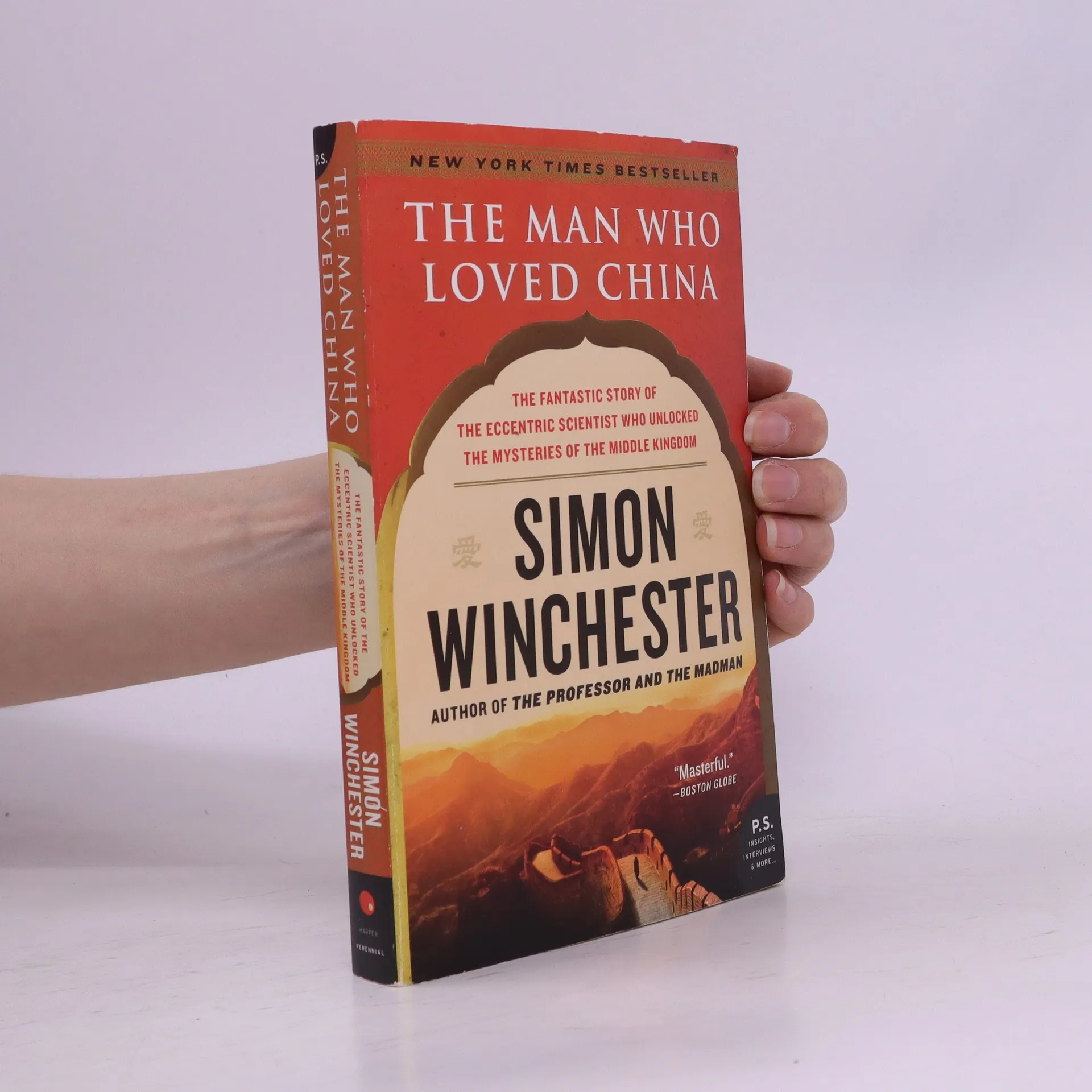
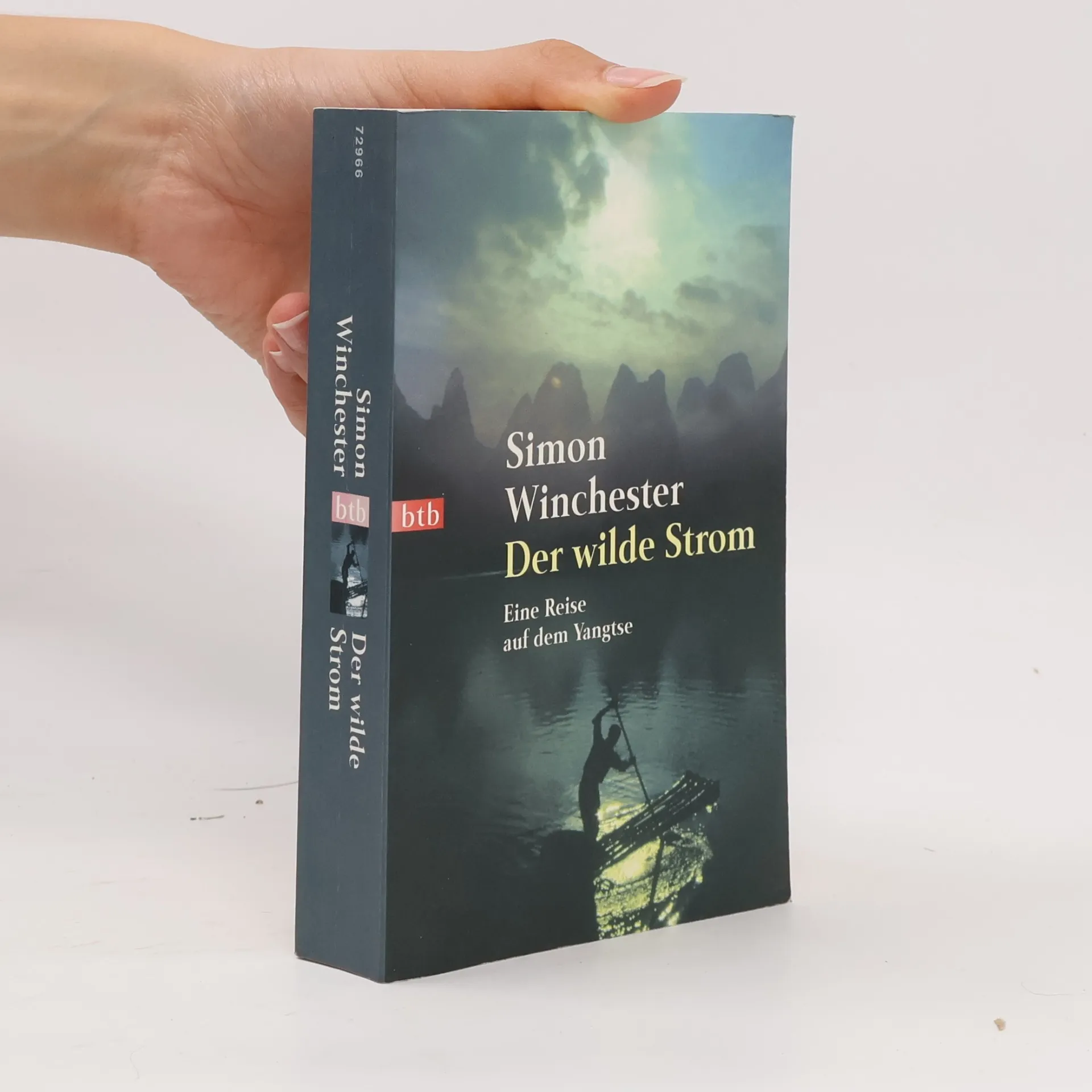
    The River at the Centre of the World. A Journey Up the Yangtze, and Back in Chinese Time
    Il fiume al centro del mondo
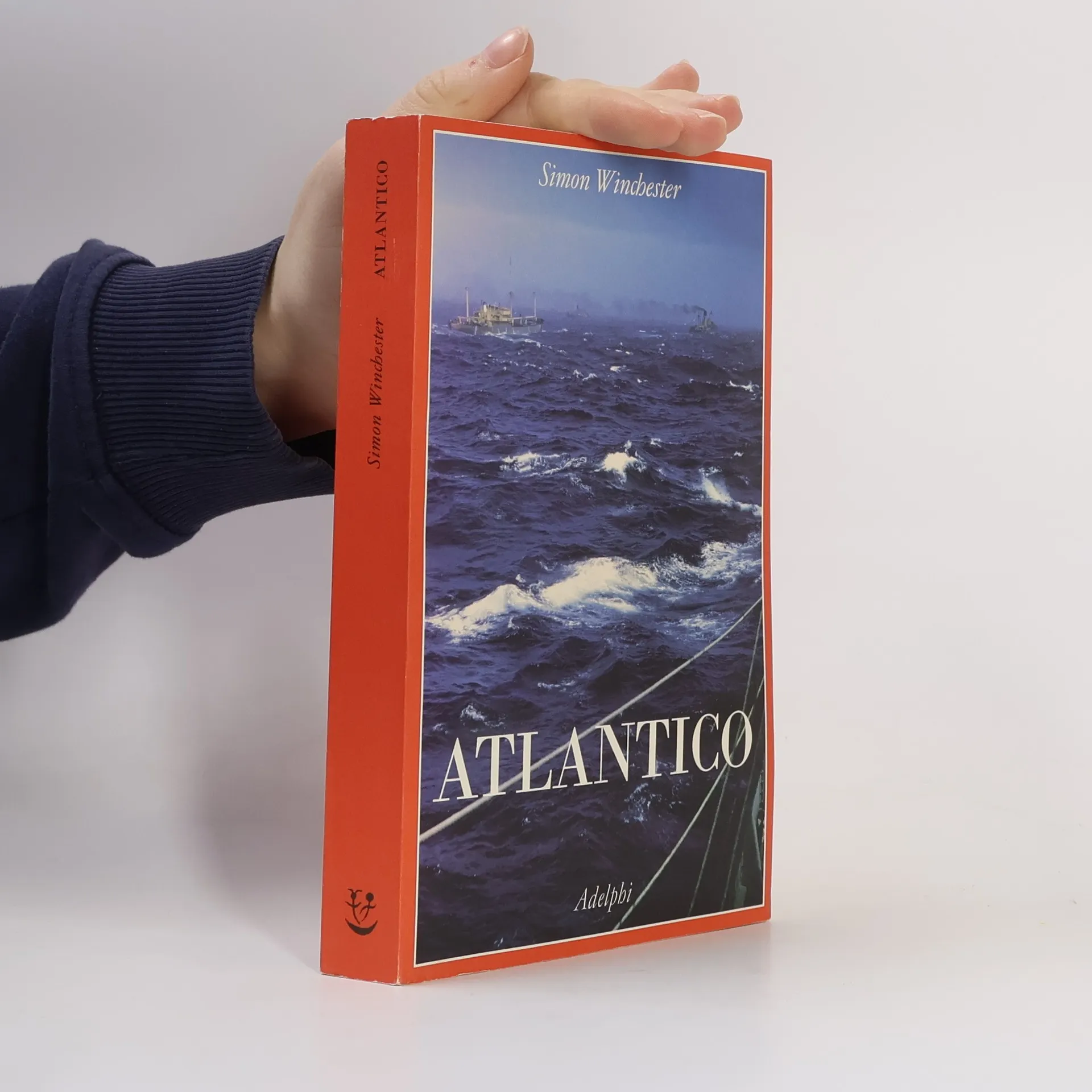
    La collana dei casi: Atlantico
    • La collana dei casi: Atlantico

      • 484pagine
      • 17 ore di lettura

      Per secoli l'uomo si è rifiutato di affrontare il mare grigio, rombante e tempestoso che si estendeva al di là delle Colonne d'Ercole, abitato da mostri terrificanti come le Gorgoni e i Giganti Centimani o da razze bizzarre come i Cimmeri, gli Etiopi e i Pigmei; solo i Fenici, avidi e temerari, osarono sfidare quelle acque alla ricerca di un mollusco da cui estrarre il colore più ambito dalle élite di potere dell'età classica. Oggi l'Atlantico, nella percezione di molti, non è altro che un piccolo inconveniente, che dura giusto il tempo di un paio di film proiettati durante un volo intercontinentale. Fra questi due estremi sono passati duemilacinquecento anni di esplo­razioni, guerre, commerci e disastri, attraverso i quali l'oceano ha plasmato le ambizioni e la condotta di marinai, scienziati, mercanti e soldati, venendo visto, a seconda delle circostanze e della sorte, come un alleato o un nemico, una risorsa o un pericolo. Simon Winchester racconta con sapienza e arguzia l'ultramillenaria relazione fra l'Atlantico e gli esseri umani – predatori vichinghi e monaci irlandesi, cacciatori di balene e mercanti di schiavi, posatori di cavi e pirati –, mescolando storia e aneddoto, geografia e ricordi persona­­li, scien­za e affabulazione. Il risultato è un'e­po­pea del «mare interno della civiltà oc­cidentale» maestosa, sorprendente, burrascosa, cangiante – quasi quanto l'oceano stesso.
      La collana dei casi: Atlantico
      4,1
    • Il fiume al centro del mondo

      • 448pagine
      • 16 ore di lettura

      Vi sono fiumi che racchiudono simbolicamente la storia del paese che attraversano: uno di questi è certamente lo Yangtze, che scorre per tutta la sua lunghezza in territorio cinese. Di volta in volta reportage, cronaca di costume, narrazione storica e racconto d'avventura, il libro ripercorre a ritroso la millenaria storia cinese risalendo la corrente dello Yangtze. Accanto a ritratti d'ambiente e racconti d'epica quotidiana s'incontrano personaggi tragici o buffi, ma sempre "veri", e luoghi di "culto" come il guado di Jiaopingdu, una delle tappe fondamentali della Lunga Marcia di Mao.

      Il fiume al centro del mondo
      3,7
    • The men who united the States

      • 496pagine
      • 18 ore di lettura

      Acclaimed New York Times bestselling author Winchester illuminates the men who toiled fearlessly to discover, connect, and bond the citizenry and geography of the U.S.A. from its beginnings and ponders whether the historic work of uniting the States has succeeded, and to what degree

      The men who united the States
      4,0
    • The Perfectionists

      • 576pagine
      • 21 ore di lettura

      The New York Times bestselling author examines the evolution of technology from the Industrial Age to the Digital Age, focusing on the essential role of precision in advancement. Beginning in eighteenth-century England during the Industrial Revolution, the establishment of measurement standards led to the creation of machine tools, enabling the mass production of various items, including firearms and optical devices. This precision ultimately paved the way for groundbreaking innovations like gene splicing and microchips. The narrative introduces key figures such as John Wilkinson, Henry Maudslay, and Thomas Jefferson, who played pivotal roles in shaping modern production and exporting these advancements to the United States, which emerged as a manufacturing powerhouse. Winchester then shifts to contemporary innovations across the globe, exploring the minds and methods that have transformed our world. He poses critical questions about the significance of precision, the tools we use to measure it, and the potential consequences of prioritizing precision over traditional craftsmanship, art, and culture. Ultimately, he challenges readers to consider whether the pursuit of precision has obscured other valuable aspects of life and whether precision and nature can coexist harmoniously in society.

      The Perfectionists
      4,1
    • Krakatoa

      • 432pagine
      • 16 ore di lettura

      Based on three days of teaching in London in May 1999, this text is an edited version of the Dalai Lama's discourse on one of the most profound and sacred texts in the Tibetan Buddhist tradition. The Eight Verses on Generating Compassion are known in Tibetan as lojong - literally, transforming your mind. In this commentary on these teachings, the Dalai Lama shows us how to transform difficult situations into opportunities for spiritual growth. He also offers practical methods as to how to develop positive ways of thinking and compassion.

      Krakatoa
      4,1
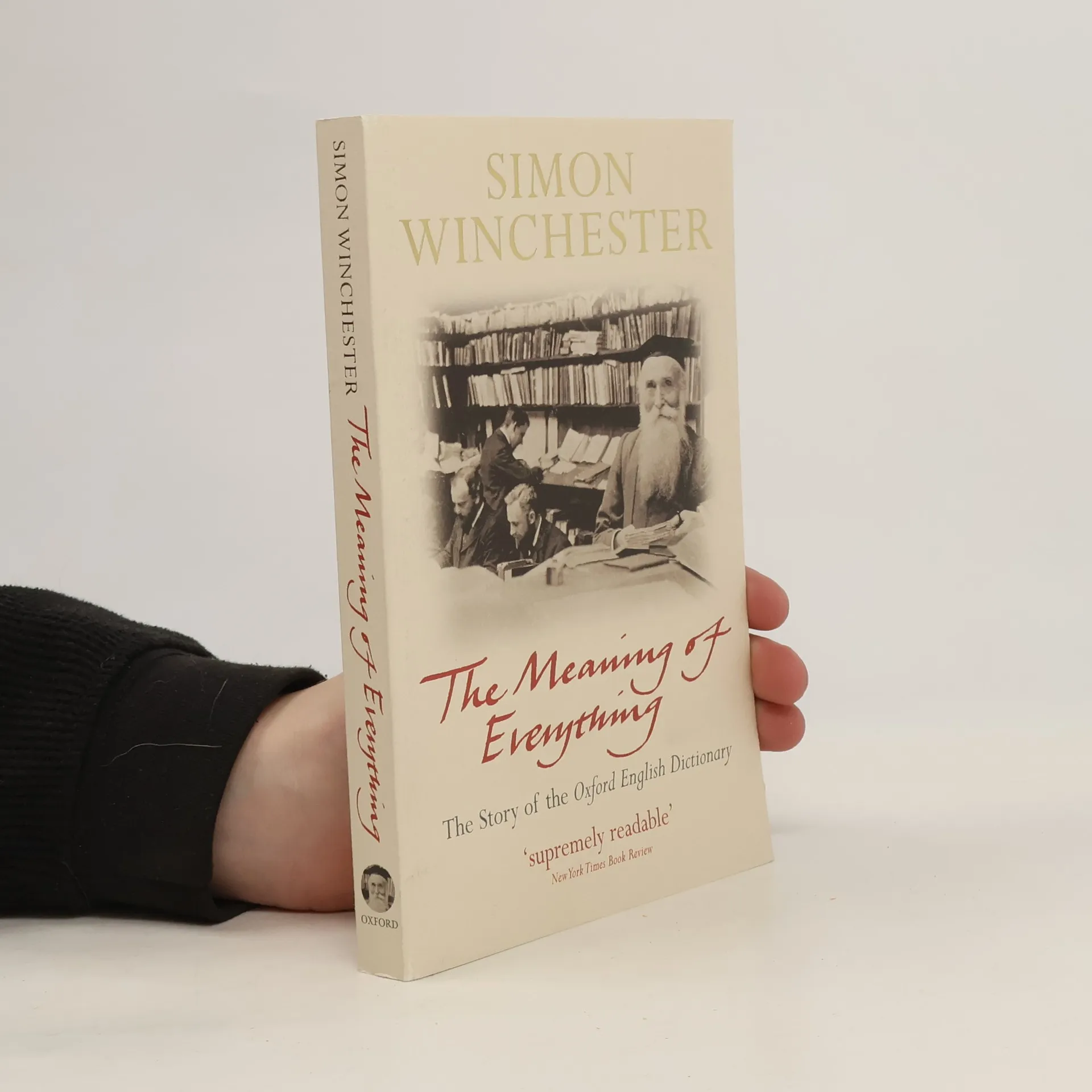
    • The Meaning of Everything

      • 288pagine
      • 11 ore di lettura

      "We visit the ugly corrugated iron structure that Murray grandly dubbed the Scriptorium -- the Scrippy or the Shed, as locals called it -- and meet some of the legion of volunteers, from Fitzedward Hall, a bitter hermit obsessively devoted to the OED, to W.C. Minor, whose story is one of dangerous madness, ineluctable sadness, and ultimate redemption. The Meaning of Everything is a scintillating account of the creation of the greatest monument ever erected to a living language. Simon Winchester's supple, vigorous prose illuminates this dauntingly ambitious project -- a seventy-year odyssey to create the grandfather of all word-books, the world's unrivaled uber-dictionary. Book jacket."--Jacket.

      The Meaning of Everything
      4,0
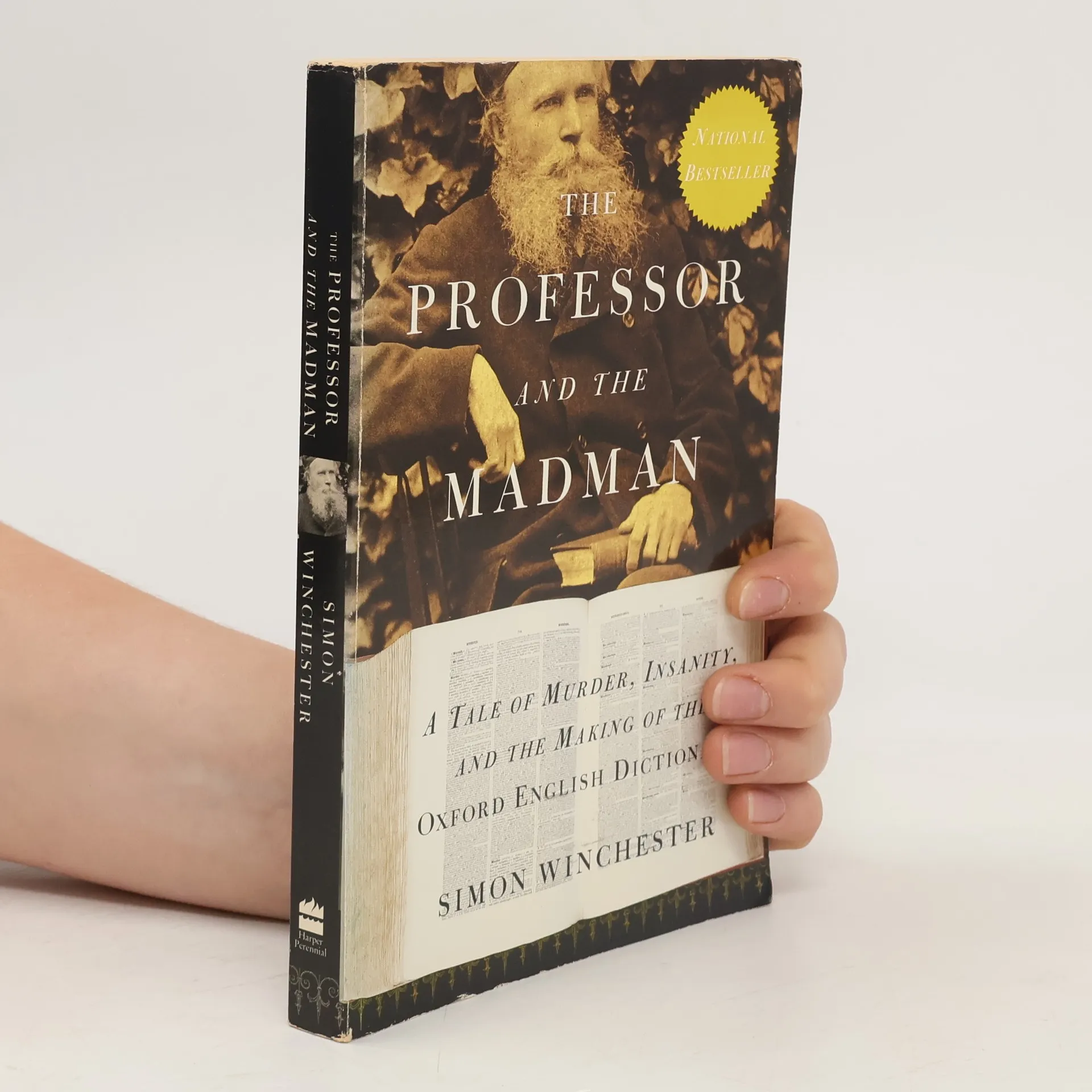
    • The making of the Oxford English Dictionary was a monumental 50 year task requiring thousands of volunteers. One of the keenest volunteers was a W C Minor who astonished everyone by refusing to come to Oxford to receive his congratulations. In the end, James Murray, the OED's editor, went to Crowthorne in Berkshire to meet him. What he found was incredible - Minor was a millionaire American civil war surgeon turned lunatic, imprisoned in Broadmoor Asylum for murder and yet who dedicated his entire cell-bound life to work on the English language.

      The surgeon of Crowthorne
      4,0
    • The River at the Center of the World

      A Journey Up the Yangtze, and Back in Chinese Time

      • 434pagine
      • 16 ore di lettura

      Offering a captivating exploration of China, the book delves into the rich tapestry of its culture, history, and the diverse lives of its people. Recognized as one of the top travel books of 1996 by the New York Times Book Review, it combines insightful observations with vivid storytelling, making it a remarkable guide for anyone interested in understanding the complexities of this vast nation.

      The River at the Center of the World
      4,0
    • The Fracture Zone

      A Return to the Balkans

      • 272pagine
      • 10 ore di lettura

      Terrible things have plagued the Balkans for centuries, and this complex region, marked by natural beauty and human-made borders, continues to experience frequent conflict and unspeakable horrors. Simon Winchester, a seasoned reporter, reflects on his earlier visit to the area during the Kosovo crisis, deciding to embark on a journey that would reveal the true nature of this fractured landscape. His travels connect two historic capitals, Vienna and Istanbul, whose imperial rivalries have significantly shaped the region's divisions. With the war ongoing, Winchester, accompanied by a linguist friend, sets off from Vienna on an extensive adventure through Slovenia, Croatia, Bosnia, Montenegro, Albania, Macedonia, Kosovo, Bulgaria, and Turkey, culminating at the Golden Horn as the war officially ends. He finds himself in Macedonia on the day NATO forces move in to take control of Kosovo, riding alongside an old friend, the commanding general. This narrative is not merely about the war; it offers an intimate portrait of the region during conflict while exploring the roots of its violence, both past and present. Winchester's keen observations create a current yet timeless understanding of a place always on the brink, weaving together its faults, fractures, and chaos into a coherent narrative.

      The Fracture Zone
      3,5