

Esaurito

Parametri
- 566pagine
- 20 ore di lettura
Maggiori informazioni sul libro
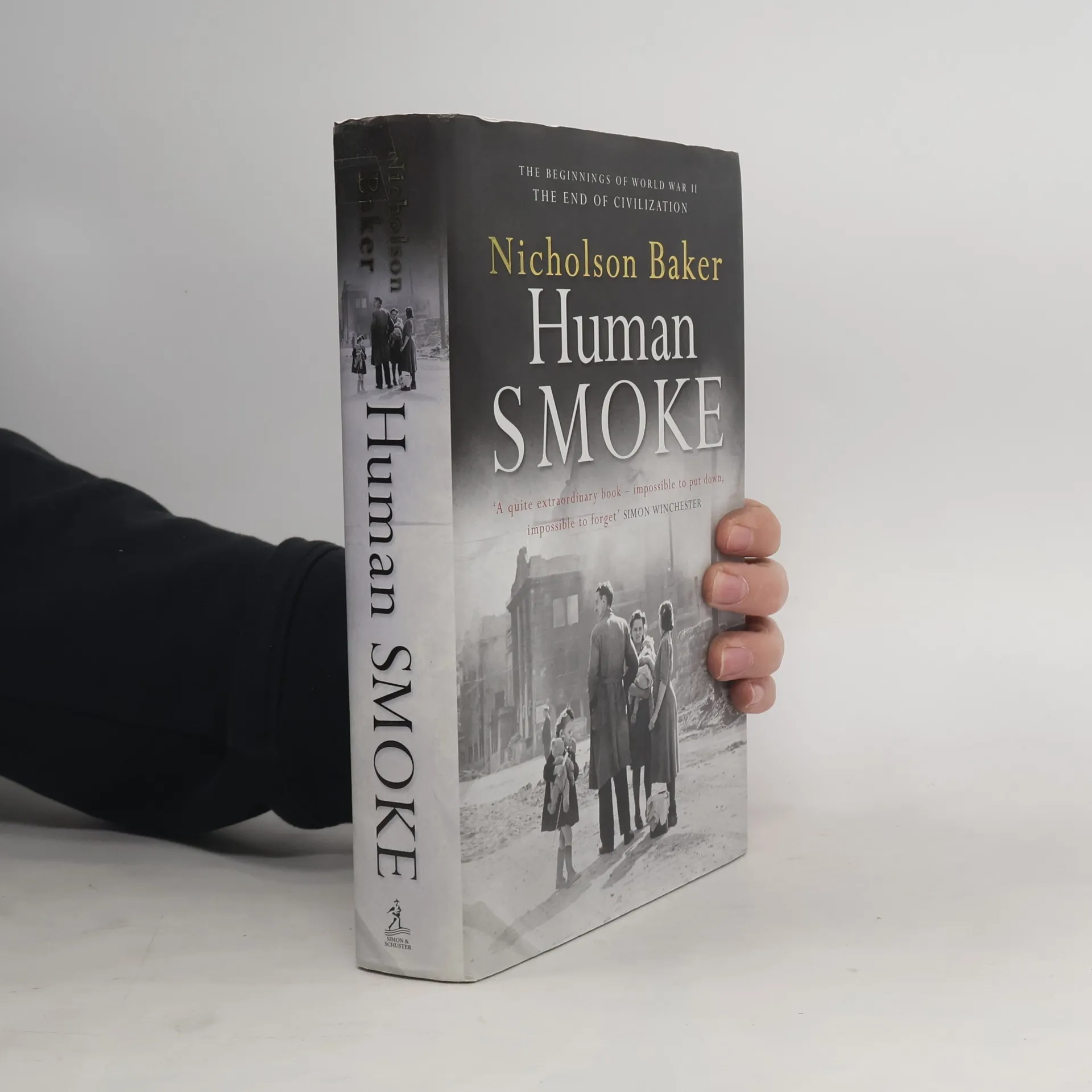
With original and controversial insights brought about by meticulous research, 'Human Smoke' re-evaluates the political turning points that led up to the Second World War, and in so doing challenges some of the treasured myths we hold about how war came about and how atrocities like the Holocaust were able to happen.



Acquisto del libro
Human Smoke, Nicholson Baker
- Lingua

- Pubblicato
- 2008
- Rilegatura
- (Copertina rigida)
Ti avviseremo via email non appena lo rintracceremo.
Metodi di pagamento
Qui potrebbe esserci la tua recensione.
- Titolo
- Human Smoke
- Sottotitolo
- The Beginnings of World War II, the End of Civilization
- Lingua
- Inglese
- Autori
- Nicholson Baker
- Editore
- Simon & Schuster Ltd
- Pubblicato
- 2008
- Formato
- Copertina rigida
- Pagine
- 566
- ISBN10
- 1847372740
- ISBN13
- 9781847372741
- Serie
- Categoria
- Tag
- Tema stórico, Politica, Guerre, Seconda guerra mondiale, Olocausto, Citazioni e proverbi, Propaganda
- Titolo originale
- Human smoke
- Valutazione
- 4,05 su 5
- Descrizione
- With original and controversial insights brought about by meticulous research, 'Human Smoke' re-evaluates the political turning points that led up to the Second World War, and in so doing challenges some of the treasured myths we hold about how war came about and how atrocities like the Holocaust were able to happen.