



Maggiori informazioni sul libro
From the author to the reader: Show-and-Tell was the very best part of school for me, both as a student and as a teacher. As a kid, I put more into getting ready for my turn to present than I put into the rest of my homework. Show-and-Tell was real in a way that much of what I learned in school was not. It was education that came out of my life experience. As a teacher, I was always surprised by what I learned from these amateur hours. A kid I was sure I knew well would reach down into a paper bag he carried and fish out some odd-shaped treasure and attach meaning to it beyond my most extravagant expectation. Again and again I learned that what I thought was only true for me . . . only valued by me . . . only cared about by me . . . was common property. The principles guiding this book are not far from the spirit of Show-and-Tell. It is stuff from home—that place in my mind and heart where I most truly live. P.S. This volume picks up where I left off in All I Really Need to Know I Learned in Kindergarten, when I promised to tell about the time it was on fire when I lay down on it.




Acquisto del libro
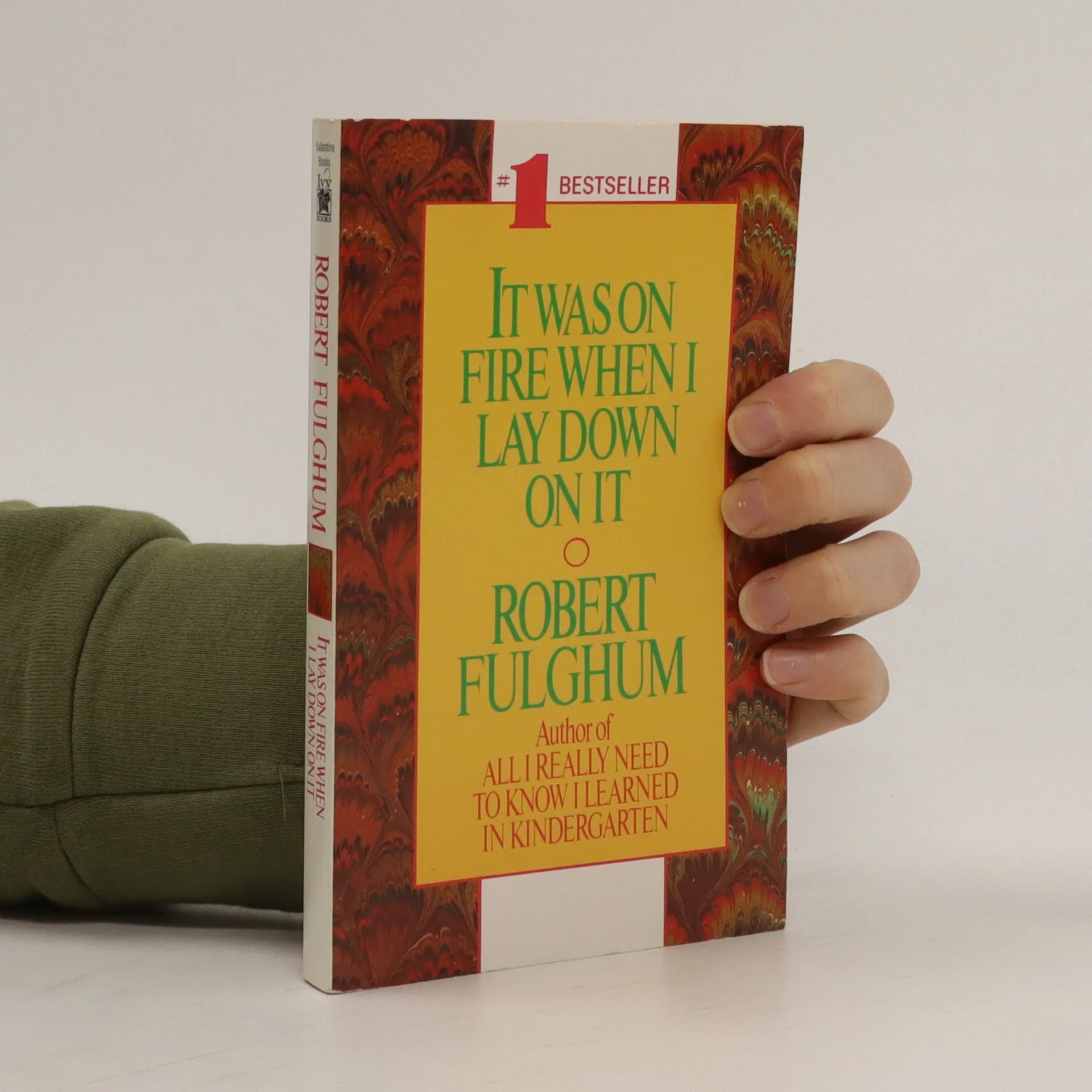
It was on fire when I lay down on it, Robert Fulghum
- Lingua

- Pubblicato
- 1991
- product-detail.submit-box.info.binding
- (In brossura)
Metodi di pagamento
Qui potrebbe esserci la tua recensione.
- Lingua
- Inglese
- Autori
- Robert Fulghum
- Editore
- Ivy Books
- Pubblicato
- 1991
- Formato
- In brossura
- Pagine
- 210
- ISBN10
- 0804105820
- ISBN13
- 9780804105828
- Serie
- Tag
- Saggistica, Storie vere, Biografie, Auto-aiuto, Umorismo, Tematica filosofica, Autobiografie e memorie, Letteratura Americana, Giornalismo d’opinione & Saggi, Ispirazione, Riflessioni e Pensieri, Saggezza di vita, Umorismo inglese
- Prima pubblicazione
- 1989
- Titolo originale
- It Was on Fire When I Lay Down on It
- Valutazione
- 4,25 su 5
- Descrizione
- From the author to the reader: Show-and-Tell was the very best part of school for me, both as a student and as a teacher. As a kid, I put more into getting ready for my turn to present than I put into the rest of my homework. Show-and-Tell was real in a way that much of what I learned in school was not. It was education that came out of my life experience. As a teacher, I was always surprised by what I learned from these amateur hours. A kid I was sure I knew well would reach down into a paper bag he carried and fish out some odd-shaped treasure and attach meaning to it beyond my most extravagant expectation. Again and again I learned that what I thought was only true for me . . . only valued by me . . . only cared about by me . . . was common property. The principles guiding this book are not far from the spirit of Show-and-Tell. It is stuff from home—that place in my mind and heart where I most truly live. P.S. This volume picks up where I left off in All I Really Need to Know I Learned in Kindergarten, when I promised to tell about the time it was on fire when I lay down on it.