


Valutazione del libro
Maggiori informazioni sul libro
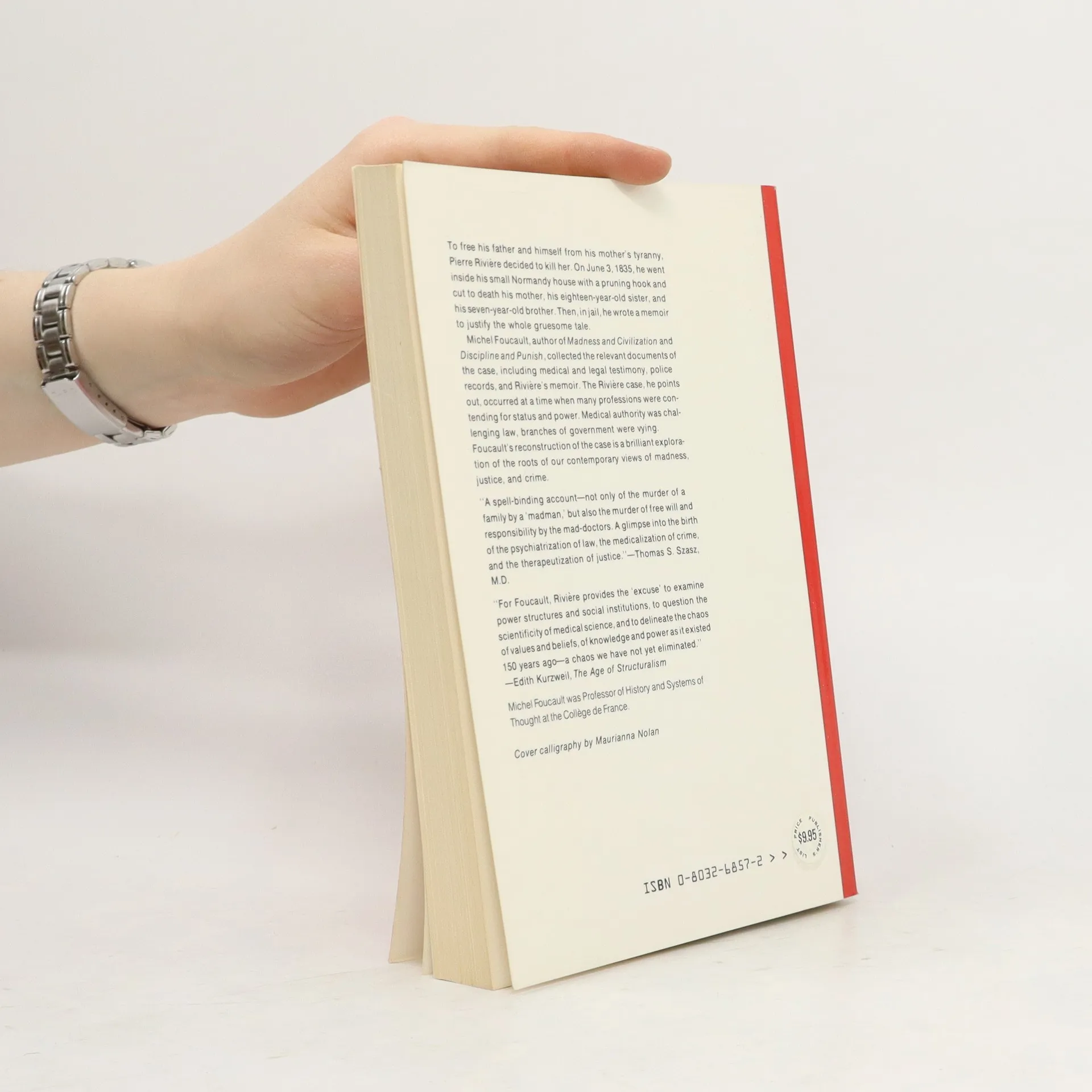
To free his father and himself from his mother's tyranny, Pierre Rivière decided to kill her. On June 3,1835, he went inside his small Normandy house with a pruning hook and cut to death his mother, his eighteen-year-old sister, and his seven-year-old brother. Then, in jail, he wrote a memoir to justify the whole gruesome tale. Michel Foucault, author of Madness and Civilization and Discipline and Punish, collected the relevant documents of the case, including medical and legal testimony, police records. and Rivière's memoir. The Rivière case, he points out, occurred at a time when many professions were contending for status and power. Medical authority was challenging law, branches of government were vying. Foucault's reconstruction of the case is a brilliant exploration of the roots of our contemporary views of madness, justice, and crime.
Acquisto del libro
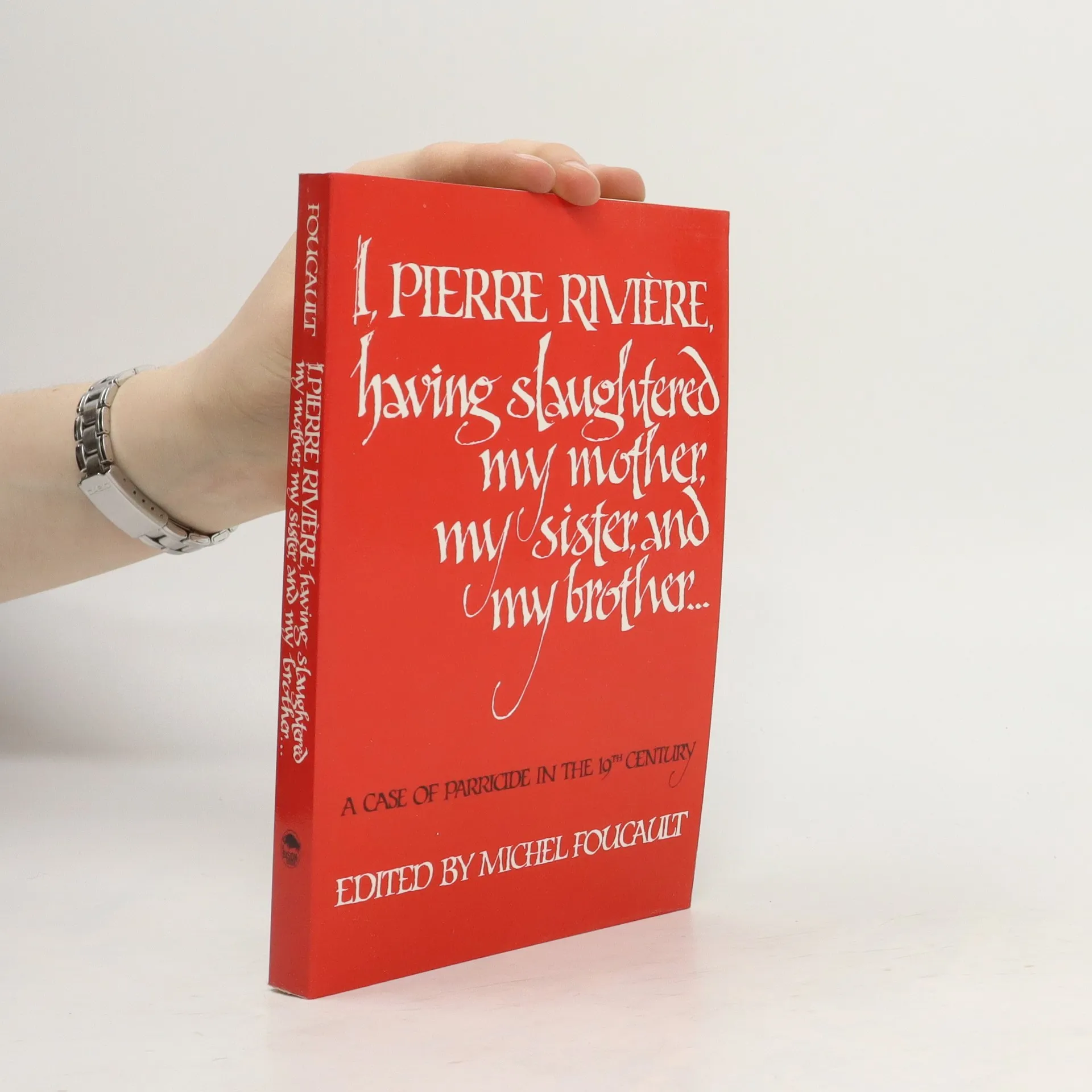
I, Pierre Rivière, Having Slaughtered My Mother, My Sister, and My Brother ..., Michel Foucault
- Lingua

- Pubblicato
- 1982
- Rilegatura
- (In brossura)
Metodi di pagamento
Qui potrebbe esserci la tua recensione.
- Titolo
- I, Pierre Rivière, Having Slaughtered My Mother, My Sister, and My Brother ...
- Lingua
- Inglese
- Autori
- Michel Foucault
- Editore
- U of Nebraska Press
- Pubblicato
- 1982
- Formato
- In brossura
- Pagine
- 288
- ISBN10
- 0803268572
- ISBN13
- 9780803268579
- Serie
- Categoria
- Valutazione
- 3,8 su 5
- Descrizione
- To free his father and himself from his mother's tyranny, Pierre Rivière decided to kill her. On June 3,1835, he went inside his small Normandy house with a pruning hook and cut to death his mother, his eighteen-year-old sister, and his seven-year-old brother. Then, in jail, he wrote a memoir to justify the whole gruesome tale. Michel Foucault, author of Madness and Civilization and Discipline and Punish, collected the relevant documents of the case, including medical and legal testimony, police records. and Rivière's memoir. The Rivière case, he points out, occurred at a time when many professions were contending for status and power. Medical authority was challenging law, branches of government were vying. Foucault's reconstruction of the case is a brilliant exploration of the roots of our contemporary views of madness, justice, and crime.