

Maggiori informazioni sul libro
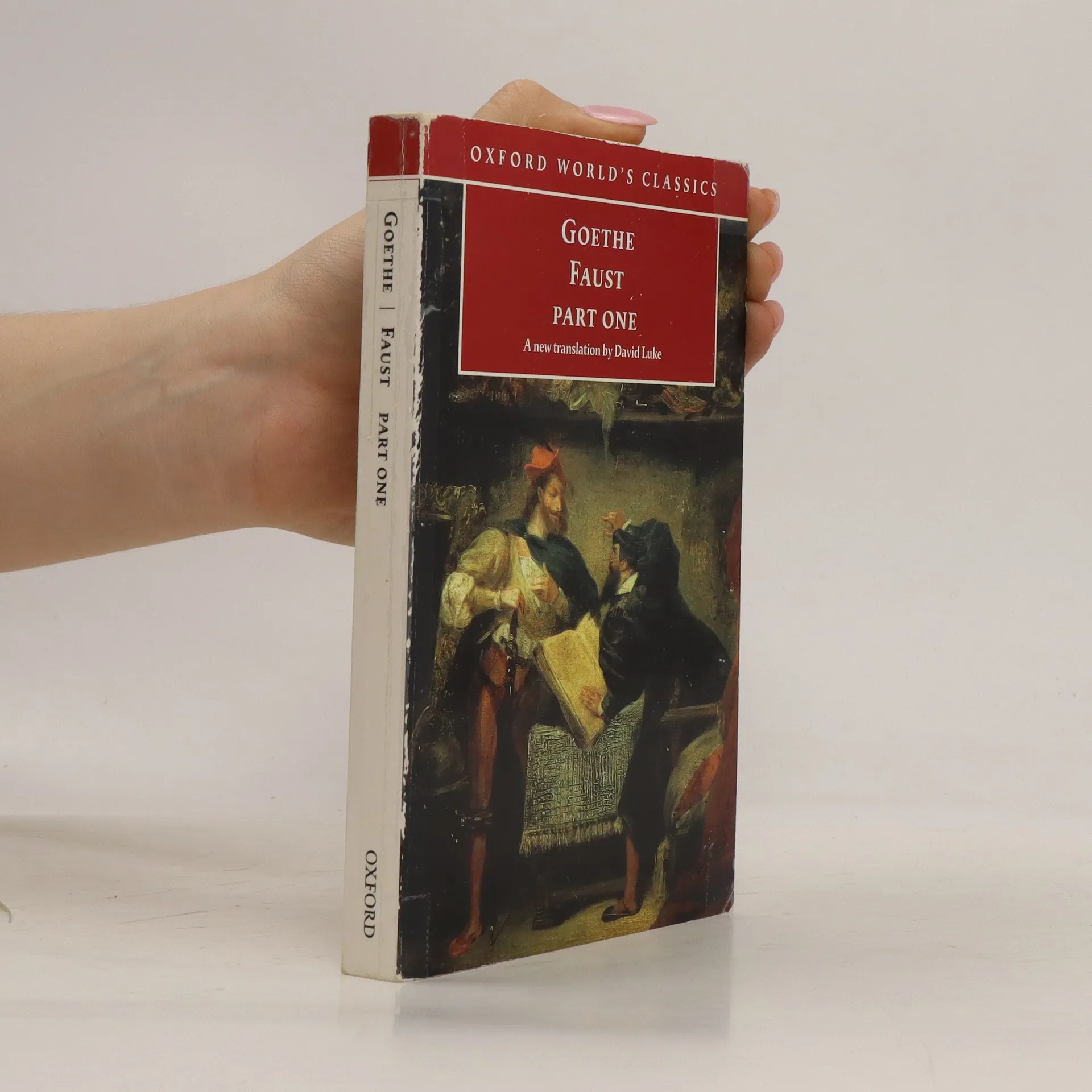
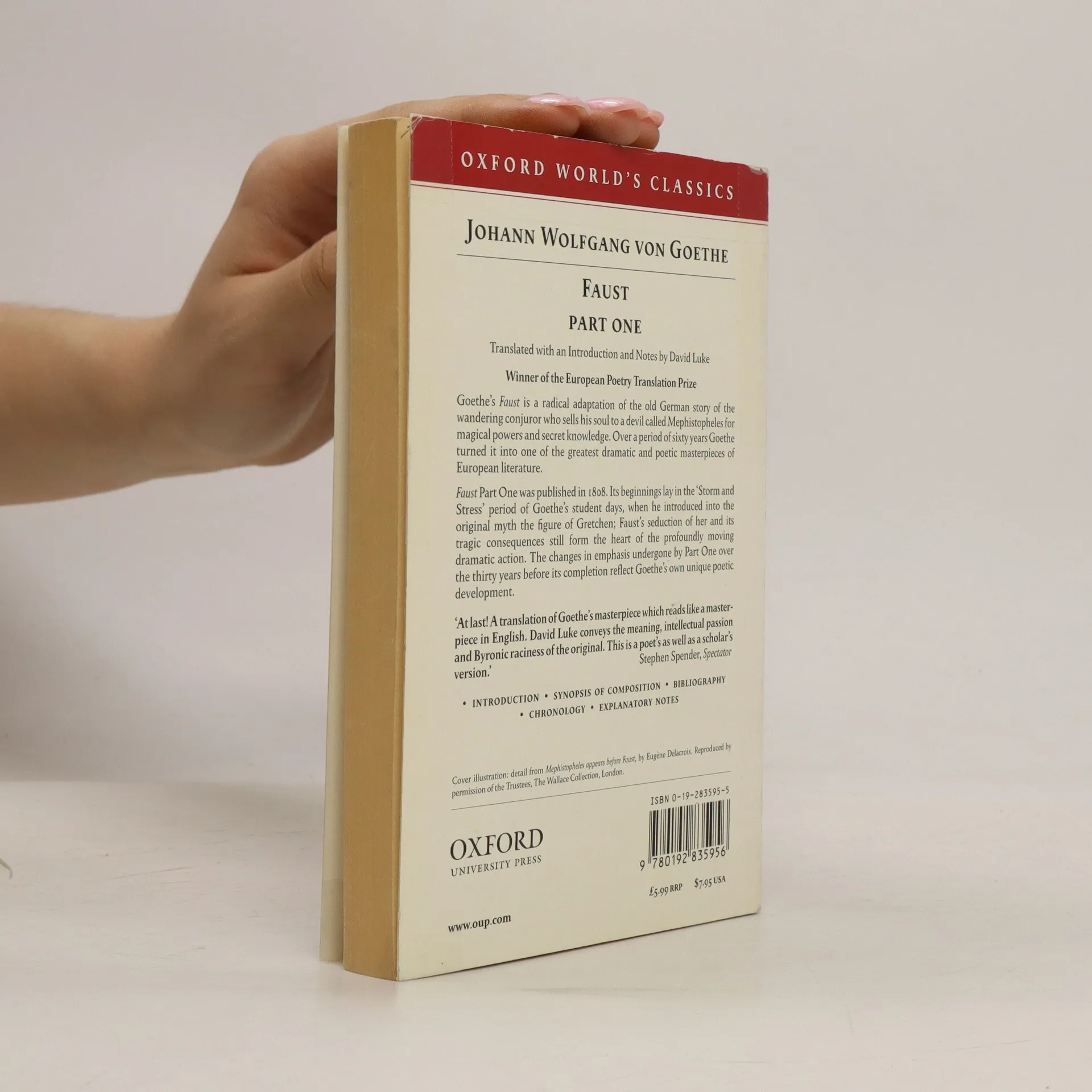
The legend of Faust grew up in the sixteenth century, a time of transition between medieval and modern culture in Germany. Johann Wolfgang von Goethe (1749-1832) adopted the story of the wandering conjuror who accepts Mephistopheles's offer of a pact, selling his soul for the devil's greaterknowledge; over a period of 60 years he produced one of the greatest dramatic and poetic masterpieces of European literature.David Luke's recent translation, specially commissioned for The World's Classics series, has all the virtues of previous classic translations of Faust, and none of their shortcomings. Cast in rhymed verse, following the original, it preserves the essence of Goethe's meaning without sacrifice toarchaism or over-modern idiom. It is as near an 'equivalent' rendering of the German as has been achieved.





Acquisto del libro
Faust. Part One, Johann Wolfgang von Goethe
- Lingua

- Pubblicato
- 1998
- Rilegatura
- (In brossura)
Metodi di pagamento
Qui potrebbe esserci la tua recensione.
- Titolo
- Faust. Part One
- Lingua
- Inglese
- Editore
- Oxford University Press, USA
- Pubblicato
- 1998
- Formato
- In brossura
- Pagine
- 240
- ISBN10
- 0192835955
- ISBN13
- 9780192835956
- Serie
- Tag
- Narrativa, Tematica filosofica, Letteratura tedesca, Classici, Opere teatrali, Tragedia, Johann Wolfgang von Goethe, 1749-1832, Leggende su Faust
- Prima pubblicazione
- 1832
- Titolo originale
- Faust
- Valutazione
- 4 su 5
- Descrizione
- The legend of Faust grew up in the sixteenth century, a time of transition between medieval and modern culture in Germany. Johann Wolfgang von Goethe (1749-1832) adopted the story of the wandering conjuror who accepts Mephistopheles's offer of a pact, selling his soul for the devil's greaterknowledge; over a period of 60 years he produced one of the greatest dramatic and poetic masterpieces of European literature.David Luke's recent translation, specially commissioned for The World's Classics series, has all the virtues of previous classic translations of Faust, and none of their shortcomings. Cast in rhymed verse, following the original, it preserves the essence of Goethe's meaning without sacrifice toarchaism or over-modern idiom. It is as near an 'equivalent' rendering of the German as has been achieved.