

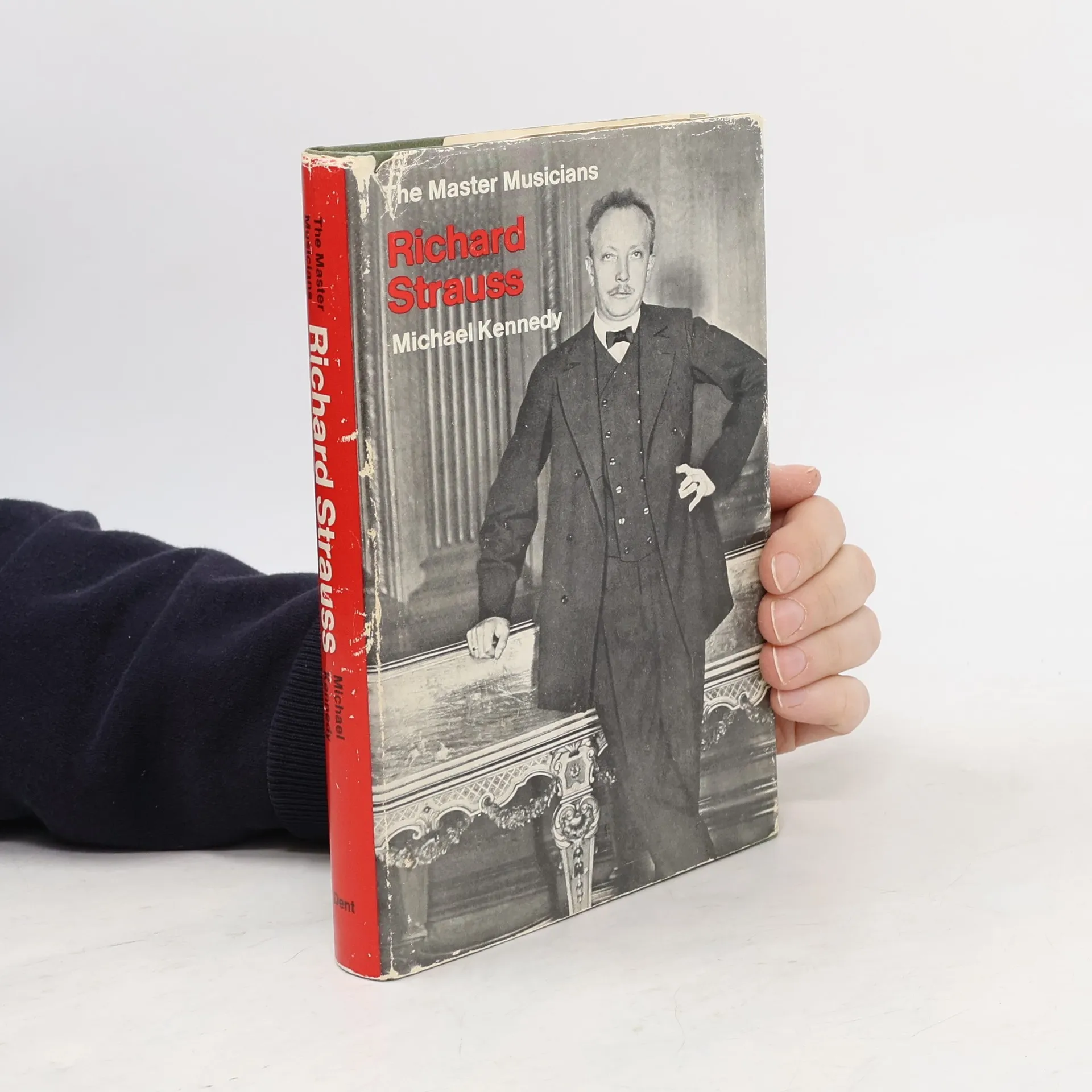
Maggiori informazioni sul libro
Was Richard Strauss the most incandescent composer of the twentieth century or merely a bourgeois artist and Nazi sympathizer? Since his death in 1949, Strauss has remained elusive in musical and historical criticism. Canadian musician Glenn Gould hailed him as the "greatest musical figure" of his time, yet he has also been labeled as an artist who lived off his past successes. English critic Rodney Milnes noted in 1995 that "the court of posterity is still reserving judgment." In this biography, Michael Kennedy explores the varied criticisms surrounding Strauss, reflecting the perceptions of his contemporaries. He presents a nuanced portrait, contrasting the exuberant young Strauss with the aloof middle-aged man who resembled a "prosperous bank manager." Kennedy examines Strauss as both a modernist arch-fiend and a redefined composer, a man professing spiritual indifference yet creating the touching ballet Der Kometentanz. He portrays Strauss as a humble family man while also claiming to be as fascinating as historical figures like Napoleon. Kennedy frames his analysis around Strauss’ admiration for German culture, reliance on family, and "Nietzschean total absorption in art," providing an insightful narrative for both scholars and general readers. He also addresses Strauss' complex relationship with Nazi authorities, detailing his roles as the father-in-law of a Jewish woman and a leading composer.

Acquisto del libro
The Master Musicians: Richard Strauss, Michael Kennedy
- Lingua

- Pubblicato
- 1976
- Rilegatura
- (In brossura)
Metodi di pagamento
Qui potrebbe esserci la tua recensione.
- Titolo
- The Master Musicians: Richard Strauss
- Lingua
- Inglese
- Autori
- Michael Kennedy
- Editore
- Dent
- Pubblicato
- 1976
- Formato
- In brossura
- Pagine
- 274
- ISBN10
- 0460031481
- ISBN13
- 9780460031486
- Serie
- Valutazione
- 4 su 5
- Descrizione
- Was Richard Strauss the most incandescent composer of the twentieth century or merely a bourgeois artist and Nazi sympathizer? Since his death in 1949, Strauss has remained elusive in musical and historical criticism. Canadian musician Glenn Gould hailed him as the "greatest musical figure" of his time, yet he has also been labeled as an artist who lived off his past successes. English critic Rodney Milnes noted in 1995 that "the court of posterity is still reserving judgment." In this biography, Michael Kennedy explores the varied criticisms surrounding Strauss, reflecting the perceptions of his contemporaries. He presents a nuanced portrait, contrasting the exuberant young Strauss with the aloof middle-aged man who resembled a "prosperous bank manager." Kennedy examines Strauss as both a modernist arch-fiend and a redefined composer, a man professing spiritual indifference yet creating the touching ballet Der Kometentanz. He portrays Strauss as a humble family man while also claiming to be as fascinating as historical figures like Napoleon. Kennedy frames his analysis around Strauss’ admiration for German culture, reliance on family, and "Nietzschean total absorption in art," providing an insightful narrative for both scholars and general readers. He also addresses Strauss' complex relationship with Nazi authorities, detailing his roles as the father-in-law of a Jewish woman and a leading composer.