

Machine Learning
- 206pagine
- 8 ore di lettura
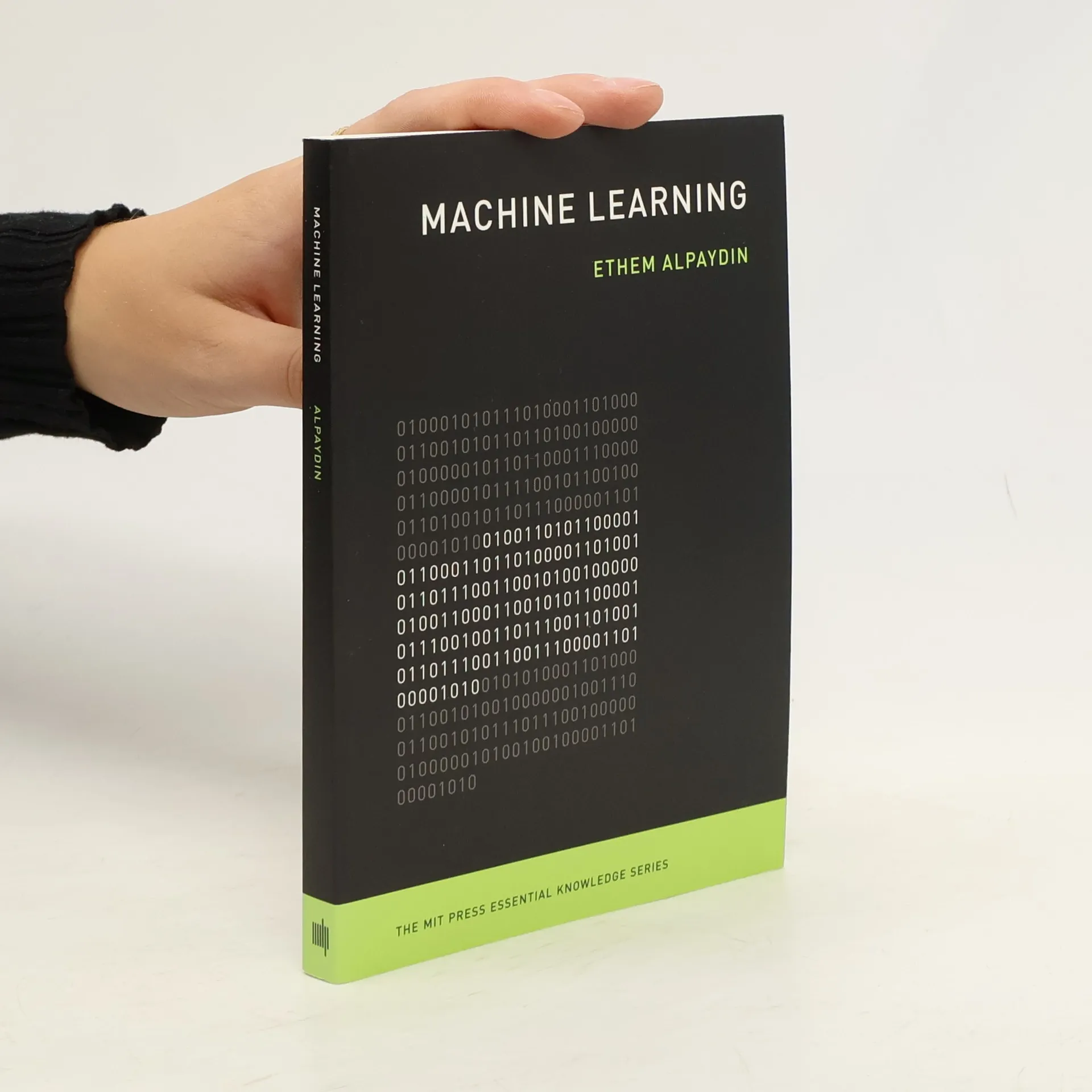
A concise overview of machine learning -- computer programs that learn from data -- which underlies applications that include recommendation systems, face-recognition, and driverless cars.
Questa serie approfondisce l'intricato mondo del calcolo adattivo e dell'apprendimento automatico. Esplora diverse tecniche che consentono ai sistemi di apprendere dall'esperienza e adattarsi a nuovi ambienti. I lettori acquisiranno informazioni sui quadri teorici e sulle innovazioni nello sviluppo algoritmico. La raccolta promuove una comprensione più profonda e l'applicazione pratica di questo campo in rapida evoluzione.


A concise overview of machine learning -- computer programs that learn from data -- which underlies applications that include recommendation systems, face-recognition, and driverless cars.
The first truly interdisciplinary text on data mining, blending the contributions of information science, computer science, and statistics.The growing interest in data mining is motivated by a common problem across disciplines: how does one store, access, model, and ultimately describe and understand very large data sets? Historically, different aspects of data mining have been addressed independently by different disciplines. This is the first truly interdisciplinary text on data mining, blending the contributions of information science, computer science, and statistics.The book consists of three sections. The first, foundations, provides a tutorial overview of the principles underlying data mining algorithms and their application. The presentation emphasizes intuition rather than rigor. The second section, data mining algorithms, shows how algorithms are constructed to solve specific problems in a principled manner. The algorithms covered include trees and rules for classification and regression, association rules, belief networks, classical statistical models, nonlinear models such as neural networks, and local memory-based models. The third section shows how all of the preceding analysis fits together when applied to real-world data mining problems. Topics include the role of metadata, how to handle missing data, and data preprocessing.
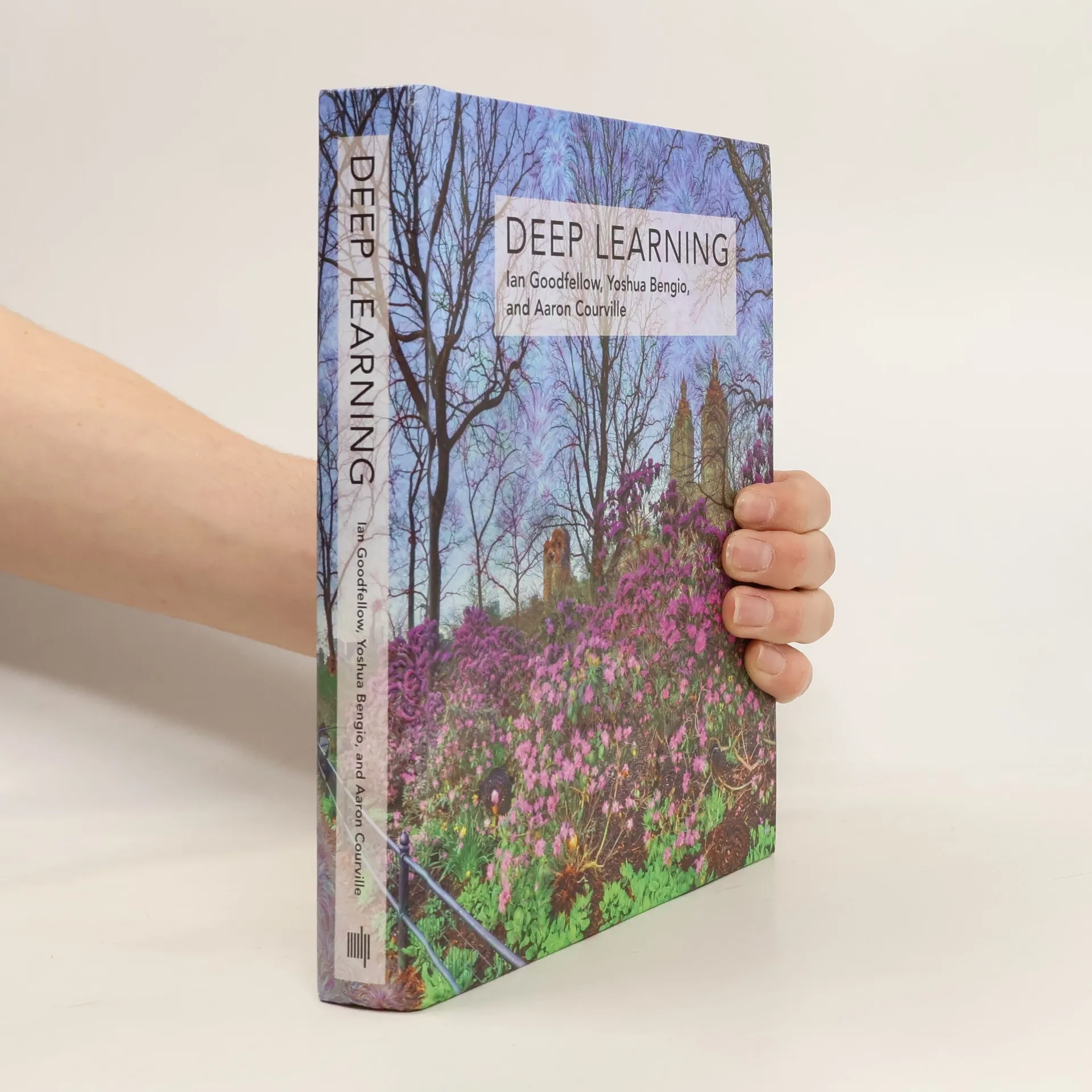
Deep learning, a subset of machine learning, allows computers to learn from experience and understand concepts hierarchically, eliminating the need for exhaustive human input. This book covers a wide array of topics in deep learning, providing essential mathematical and conceptual foundations in linear algebra, probability theory, information theory, numerical computation, and machine learning. It details industry-relevant techniques such as deep feedforward networks, regularization, optimization algorithms, convolutional networks, and sequence modeling, while also exploring applications in natural language processing, speech recognition, computer vision, online recommendation systems, bioinformatics, and video games. Additionally, it presents research perspectives on theoretical topics like linear factor models, autoencoders, representation learning, structured probabilistic models, Monte Carlo methods, the partition function, approximate inference, and deep generative models. This resource is suitable for undergraduate and graduate students pursuing careers in industry or research, as well as software engineers looking to implement deep learning in their products.
An account of key ideas and algorithms in reinforcement learning. The discussion ranges from the history of the field's intellectual foundations to recent developments and applications. Areas studied include reinforcement learning problems in terms of Markov decision problems and solution methods.
This comprehensive introduction to machine learning employs probabilistic models and inference as a unifying framework. The explosion of electronic data on the Web necessitates automated data analysis methods, and machine learning addresses this by developing techniques to automatically identify patterns and predict future data. The textbook presents a self-contained overview of the field, integrating essential background topics such as probability, optimization, and linear algebra, while also covering recent advancements like conditional random fields, L1 regularization, and deep learning. Written in an informal and accessible style, it includes pseudo-code for key algorithms, along with numerous color illustrations and worked examples from diverse fields like biology, text processing, computer vision, and robotics. Instead of merely presenting a variety of heuristic methods, the book emphasizes a principled model-based approach, often utilizing graphical models for clear and concise specification. Most models discussed are implemented in the freely available MATLAB software package, PMTK (probabilistic modeling toolkit). This resource is ideal for upper-level undergraduates with a basic college math background and beginning graduate students.