

Il libro è attualmente esaurito
Parametri
- 198pagine
- 7 ore di lettura
Maggiori informazioni sul libro
Friedrich Nietzsche's work serves as a powerful critique of modernity, challenging established notions in science, arts, and politics. He argues against the universality of morality, asserting that moral systems are shaped by individual perspectives rather than absolute truths. The book particularly targets European and Christian morality, which Nietzsche sees as hypocritical and life-denying. Through this provocative analysis, it examines themes of identity, religion, democracy, psychology, and individual freedom, influencing contemporary moral philosophy significantly.


Pubblicazione
- 2024

- 2024
- 2023
- 2023
- 2023
- 2023
- 2023
- 2023
- 2023
- 2023
- 2023
- 2023

- 2022
- 2022
- 2022
- 2022
- 2022
- 2022
- 2022
- 2021
- 2021
- 2021
- 2021
- 2021
- 2021
- 2021
- 2021

- 2020
- 2020
- 2020
- 2020
- 2020
- 2020
- 2020
- 2020
- 2020
- 2020
- 2020
- 2020
- 2020
- 2020
- 2020
- 2020
- 2020
- 2020
- 2020

- 2019
- 2019
- 2019
- 2019
- 2019


- 2018

- 2018
- 2018
- 2018
- 2018
- 2018
- 2018
- 2018
- 2018
- 2018
- 2017
- 2017
- 2017
- 2017
- 2016

- 2013
- 2012
- 2010
- 2009
- 2009

- 2008
- 2008
- 2008
- 2008
- 2007
- 2007
- 2006
- 2005
- 2005
- 2004
- 2004





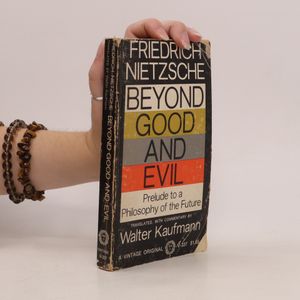


Acquisto del libro
Beyond Good and Evil, Friedrich Wilhelm Nietzsche
- Lingua

- Pubblicato
- 2024
Ti avviseremo via email non appena lo rintracceremo.
Metodi di pagamento
Qui potrebbe esserci la tua recensione.
- Titolo
- Beyond Good and Evil
- Lingua
- Inglese
- Editore
- Warbler Classics
- Pubblicato
- 2024
- Pagine
- 198
- ISBN13
- 9781962572675
- Serie
- Tag
- Saggistica, Scienze sociali, Storie vere, Temi psicologici, Tematica filosofica, Letteratura tedesca, Giornalismo d’opinione & Saggi, XIX Secolo
- Prima pubblicazione
- 1886
- Titolo originale
- Jenseits von Gut und Böse
- Valutazione
- 4,25 su 5
- Descrizione
- Friedrich Nietzsche's work serves as a powerful critique of modernity, challenging established notions in science, arts, and politics. He argues against the universality of morality, asserting that moral systems are shaped by individual perspectives rather than absolute truths. The book particularly targets European and Christian morality, which Nietzsche sees as hypocritical and life-denying. Through this provocative analysis, it examines themes of identity, religion, democracy, psychology, and individual freedom, influencing contemporary moral philosophy significantly.